National Climate Center: Autumn in 2023 is the warmest autumn since 1961.

CCTV News:According to the official news of the National Climate Center, in the autumn of 2023 (September to November), the national average temperature was 1.1℃ higher than normal, which was the warmest autumn since 1961. The precipitation is slightly more overall, but the spatial distribution is uneven. In autumn, there were nine regional rainstorm processes in China, among which the rainstorm process was particularly strong from September 3 to 13. Less typhoons are generated, more landings are made, and the impact is heavy; There are frequent cold air processes, of which two processes reached the cold wave level on November 6-7 and 23-25; Stage development of meteorological drought in the southeast of southwest China; The autumn rain in West China lasts for a long time and there is more precipitation. Northeast China and eastern Inner Mongolia have frequent rain and snow and thick snow. From the end of October to the beginning of November, a large range of haze and foggy weather appeared in parts of central, eastern and southwestern China.

  I. National Weather and Climate Characteristics in Autumn of 2023

  The national average temperature is the highest in the same period in history.

  In the autumn of 2023 (September to November), the national average temperature was 11.3℃, which was 1.1℃ higher than the normal period and the highest in the same period since 1961. The temperature is 0.5-2℃ higher in most parts of the country, with 2-4℃ higher in northern and eastern Xinjiang. The average temperatures in Guizhou, Liaoning, Sichuan, Tianjin, Xinjiang, Yunnan and Zhejiang are all the highest in the same period since 1961, and Gansu, Henan and Shandong are the second highest.

  During the season, the daily maximum temperature of 66 national meteorological stations in Dunhuang, Gansu (37.4℃, September 4th) and Guazhou (36.8℃, September 5th) exceeded or equaled the local historical extreme value in autumn. Extreme daily cooling events occurred at 36 stations in Northeast China, Hebei, Inner Mongolia, Shandong, Shaanxi and other places, and the daily cooling range of Wudalianchi in Heilongjiang (17℃, November 3) exceeded the historical extreme.

  The overall precipitation is slightly higher and the spatial distribution is uneven.

  In autumn, the national average precipitation is 126.8 mm, which is 5.3% more than the normal period (121.4 mm). The spatial distribution of precipitation is uneven. The precipitation in most parts of North China, the south of southwest China and western Sichuan, central and western Inner Mongolia, western and southeastern Xinjiang, western and southern Tibet is less than 20% to 80%, and the local precipitation is less than 80%. Central and northern central China and southeastern Shaanxi, northeastern Chongqing, most of Guangdong, southeastern Guangxi, eastern Qinghai and northern Xinjiang are 50% to 2 times more. The precipitation in Guangdong is the highest in the same period in history, and Qinghai is the second highest in history.

  During the season, the daily precipitation of 56 national weather stations in China exceeded the local historical extreme in autumn, and the daily precipitation of 10 stations, including Fuzhou, Fujian (395.9 mm, September 6th) and Panyu, Guangdong (361.9 mm, September 8th), exceeded the historical record.

  Second, the main weather and climate events in autumn

  Nine regional rainstorm processes occurred.

  In autumn, there were nine regional rainstorm processes in China, among which the rainstorm process from September 3 to 13 was particularly strong.

  From September 3 to 13, affected by "Anemone" and its residual circulation, heavy rains occurred in Jiangnan and South China, with large accumulated rainfall and daily precipitation in many places breaking historical extremes. The cumulative rainfall in eastern Fujian, southern Guangdong, eastern and southern Guangxi, eastern Hainan and Taiwan Province is 100-300mm, including 300-500mm in northeastern Fujian, southwestern Guangdong and eastern Guangxi, over 500mm in six counties (cities, districts) such as Changle, Yangchun and Bobai, Fujian, Fuzhou, Fujian (395.9mm) and Panyu, Guangdong (361.9mm).

  Typhoon generation is less, landing is more, and the impact is heavier.

  In autumn, four typhoons were generated in the Pacific Northwest and the South China Sea, which was significantly less than the normal period (11 typhoons), and all four typhoons landed in China, which was more than the normal period (2 typhoons).

  No.9 typhoon "Sura" landed on the southern coast of Zhuhai, Guangdong Province on September 2, with a small scale but strong intensity, and the super typhoon level lasted for a long time. Typhoon No.11 "Anemone" landed on the southeast coast of China three times from September 3 to 5. "Sura" and "Anemone" have successively affected South China, resulting in overlapping risks of rain and waterlogging. Many small and medium-sized rivers have experienced floods exceeding the police, and many places in Guangdong have experienced waterlogging, landslides, road interruptions and other dangers. Typhoon No.14 "Little Dog" landed at Eguanbi, Pingtung County, Taiwan Province on October 5, which was the third strongest typhoon landing in October since 1949, with a long impact time and a large accumulated rainfall. From October 5 to 11, the cumulative precipitation in six counties (cities, districts) in Guangdong Province was the third highest in the same period since 1961. Typhoon No.16 "Sanba" landed in Hainan and Guangdong three times from October 19 to 20, and the precipitation in eight national weather stations in Guangxi and Guangdong Province exceeded the extreme value in October.

  There are 10 cold air processes affecting China, and the number of processes in November is obviously higher.

  In autumn, a total of 10 cold air processes affected China, and the number was close to the same period of the year. 6 times occurred in November, 1.7 times more than normal. Among them, two processes from November 6 to 7 and from November 23 to 25 reached the cold wave level.

  From November 3 to 7, cold air and cold wave processes successively affected China. Except for the eastern part of southwest China, southern China and southern Jiangnan, the temperature in most parts of the country dropped by 8-16℃, and the temperature in eastern North China and central Shandong, central and northeastern Inner Mongolia, northwestern Heilongjiang and central and southern Liaoning dropped by more than 16℃. The process of cold air and cold wave causes a wide range of gale cooling and rain and snow weather, which has a great impact on agriculture and animal husbandry production, transportation, energy supply, urban operation, human health and residents’ life.

  Stage development of meteorological drought in southeast of southwest China

  In autumn, due to the influence of high temperature and less precipitation, meteorological drought in Yunnan, Guizhou, Sichuan and Chongqing developed in stages and eased in the middle and late October. Since November, the meteorological drought in the southeast of southwest China has developed again. Up to now, there are moderate to severe meteorological droughts in eastern Yunnan, western and southern Guizhou.

  The autumn rain in West China started early and ended late, with a long duration and more precipitation.

  In 2023, the autumn rain in West China began on August 23rd, 10 days earlier than normal, and ended on November 16th, 13 days later than normal. The autumn rain period is 85 days, which is 24 days longer than normal. From August 23rd to November 16th, the average rainfall in West China was 287mm, 44.6% more than normal. The rainy weather from September to early October is not conducive to autumn harvest, stubble preparation and rape sowing and seedling raising in some parts of West China, but precipitation is beneficial to farmland moisture increase and agricultural water storage.

  Northeast China and eastern Inner Mongolia have frequent rain and snow, with deep snow.

  In November, there was frequent rain and snow in Northeast China and eastern Inner Mongolia, and the number of snowfall days was generally more than normal, with 5 to 10 days more in eastern Heilongjiang, central and southern Jilin, northwestern Liaoning and parts of northeastern Inner Mongolia. The cumulative precipitation in Heilongjiang and Jilin are the highest in the same period since 1961, and Liaoning is the second highest. The number of days above heavy snow in Heilongjiang and Jilin is the highest in the same period since 1961. The maximum snow depth in most parts of Heilongjiang, western Jilin and northwestern Liaoning is 5 to 20 cm, including 20 to 40 cm in eastern Heilongjiang and over 40 cm locally. Deep snow and ice accumulation have a great impact on transportation and energy security.

  Three strong convective weather processes affected China, and Jiangsu was hit by a strong tornado.

  In autumn, there were three severe convective weather processes in China, which were on September 17-18, September 19-20 and November 5-6. A total of 159 counties in 19 provinces have been affected by wind and hail disasters. On September 19th, Suqian City and Yancheng City, Jiangsu Province were hit by tornadoes of magnitude EF2 and EF3, respectively, which were seriously affected.

  From the end of October to the beginning of November, a large range of haze and foggy weather appeared in parts of the east and southwest.

  From October 28th to November 2nd, haze appeared in Beijing, Tianjin, Hebei, eastern Henan, western Shandong, eastern Hubei, northern Anhui, southern Heilongjiang, central Jilin and other places, and severe haze appeared in parts of Beijing, Tianjin and Hebei. Fog weather occurred in southeastern Liaoning, central Jiangsu, southern Anhui, central and northern Hunan, central and western Sichuan Basin, western Chongqing, northwestern Guangxi, central and northern Guizhou, central and southern Jiangxi, and northwestern Fujian. Haze and foggy weather cause reduced visibility and air pollution, which affects traffic and human health.

Notice of the Anhui Provincial Department of Education on Doing a Good Job of Upgrading from Ordinary College to Undergraduate in 2022

Wan Jiao Mi Fa [2021] No.204

Relevant institutions of higher learning:

In order to further deepen the comprehensive reform of higher education and build a talent growth overpass, in 2022, our province will continue to carry out the training mode of upgrading from ordinary college level to undergraduate education (hereinafter referred to as "ordinary college to undergraduate"). According to the requirements of the Notice of the General Office of the Ministry of Education on Doing a Good Job in the Enrollment Work of the College Entrance Examination for Ordinary Colleges and Universities in 2022 (Teaching Hall [2021] No.8), the notice on doing a good job in the college entrance examination for ordinary colleges and universities in 2022 is as follows.

First, strengthen organizational leadership. Ordinary college entrance examination is an important measure to implement the National Vocational Education Reform Implementation Plan, build a modern vocational education system and serve the construction of "three places and one district". Colleges and universities should attach great importance to the enrollment of ordinary college students, and set up an enrollment work leading group headed by the main leaders, with the leaders in charge of enrollment and discipline inspection and supervision as the deputy heads, and the enrollment, educational affairs, discipline inspection and supervision departments and other relevant departments to participate in it, and be responsible for organizing the implementation of the enrollment examination. Under the unified leadership of the leading group, actively and steadily organize the work of proposition, examination, marking, grading and admission. It is necessary to strictly implement the requirements of the Notice of Anhui Provincial Department of Education on Prohibiting Pre-entrance Examination Counseling in Pilot Colleges for Vocational College Entrance Examination Reform (Wan Jiao Mi Gao [2014] No.6), and undergraduate colleges and their faculty and staff who have the task of enrolling undergraduate students shall not hold or participate in the holding of remedial classes and cram schools linked to the enrollment of undergraduate students in any form.

Second, arrange the enrollment plan reasonably. In 2022, the overall enrollment scale and enrollment specialty categories of ordinary colleges in our province are basically the same as those in 2021. Colleges and universities should clearly define the orientation of talent selection and training, comprehensively consider the factors such as the orientation of colleges and universities, teaching quality and school conditions, adhere to the employment orientation, rationally arrange the enrollment majors and scale, focus on the enrollment of majors urgently needed for industrial upgrading and improving people’s livelihood, and tilt to the fields of electronic information, machinery, biomedical engineering, green environmental protection and preventive medicine, health service and management, emergency management, aged care service management, nursing, domestic service, cultural relics and archaeology. Ordinary undergraduate programs are listed separately, and unfinished programs are not transferred to ordinary college entrance examination enrollment. Colleges and universities should take the initiative to serve the national and provincial major strategies, better meet the diverse learning needs of students, and complete the enrollment task with high quality.

Third, strict qualification examination. In 2022, the enrollment targets of ordinary colleges in Anhui Province are: 1. Full-time ordinary higher vocational (specialist) graduates from provincial colleges in Anhui Province (and adult colleges and universities approved to hold ordinary higher vocational education); 2. Retired soldiers with general higher vocational (junior college) education who were enlisted in Anhui Province. Among them, higher vocational (junior college) graduates and students (including freshmen in colleges and universities) who have been drafted into the army and completed their studies in higher vocational (junior college) after retirement can apply to participate in the enrollment of retired college students in relevant universities without examination. In principle, the undergraduate majors of retired soldiers who meet the exemption conditions should generally correspond to the majors of higher vocational colleges. Candidates of retired soldiers who meet the exemption conditions are exempted from taking the cultural examination. The relevant colleges and universities can organize a comprehensive examination of relevant vocational adaptability or vocational skills according to the requirements of professional personnel training, and make comprehensive evaluation and merit-based admission according to the examination results, combined with the candidates’ volunteers, achievements during school and performance during service. Candidates who fail to report after admission and give up their admission qualifications will no longer enjoy the policy of exemption from examination and promotion to undergraduate education. Retired soldiers who are not college students and do not meet the exemption conditions can choose to apply for the special plan of non-exemption retired soldiers, which shall be implemented in accordance with the relevant provisions of the Notice on Doing a Good Job in the Recruitment of Students from Colleges and Secondary Schools (Wan Zheng [2020] No.7). In addition, in accordance with the unified deployment of the Ministry of Education, during the transition period of consolidating and expanding the achievements of poverty alleviation, in 2022, we will continue to implement the special plan to recruit higher vocational (junior college) graduates from poor families with the original file card.

The registration qualifications of ex-soldiers and candidates with the original file card must be approved by the Provincial Department of Veterans Affairs, the Provincial Rural Revitalization Bureau and other departments, and the candidates who won the skills competition will be subject to the list published by the Provincial Department of Education. In principle, all enrollment majors apply for admission according to the major categories of higher vocational (junior college) majors, among which medical and health, art and sports must be professional counterparts. Liberal arts, science and engineering, art and sports are not allowed to be admitted across categories. Undergraduate colleges and universities must specify the relevant requirements for the admission qualifications of ordinary undergraduate colleges in the enrollment regulations. All higher vocational (junior college) graduation institutions should strengthen the examination qualification examination, and students who cannot obtain the graduation certificate of higher vocational (junior college) as scheduled shall not pass the examination.

Fourth, standardize the organization and management of examination admission. In order to ensure the scientificity and fairness of the examination selection, and at the same time give candidates more choices and more opportunities for adjustment and admission, the entrance examination for ordinary college students will continue to implement the entrance test method of "two public courses (150 points each)+two professional courses (150 points each)". The examination subjects are divided into arts and sciences, two public courses for liberal arts are "College Chinese+English" and two public courses for science are "Advanced Mathematics+English". The public course is organized by the Provincial Education Admissions Examination Institute for unified examination. Specialized courses are proposed independently or jointly by colleges and universities, and examinations are organized. Colleges and universities should speed up the construction of standardized examination rooms. The Provincial Education Admissions Examination Institute has established a unified provincial admission adjustment system to carry out admission adjustment work. In 2022, the specific examination admission arrangement will be arranged by the Provincial Education Admissions Examination Institute.

Five, the smooth development of joint training pilot. Relevant undergraduate colleges and universities should earnestly fulfill the main responsibility of running a school, jointly train higher vocational colleges, reasonably determine the major and scale of training, earnestly strengthen the management of education and teaching, and ensure the smooth development of the pilot work. The Provincial Department of Education will organize the inspection of the pilot work in due course.

Sixth, scientifically formulate enrollment plans and articles of association. Colleges and universities are required to formulate the enrollment charter of the general college entrance examination according to the regulations. The enrollment charter should specify the professional enrollment plan (including the single-column plan for retired soldiers and the special plan for graduates from poor families who have established the card, etc.), the professional requirements at the higher vocational stage, the examination time, the examination scope, the examination methods, the admission rules, the proportion and admission methods of the students who won the skill competition, the attributes of professional joint training and the name of the training point, the rules and procedures for adjusting the inter-professional plans during the admission process, and the rules and procedures for accepting students from other schools. The enrollment regulations were submitted to the Provincial Education Admissions Examination Institute, and were jointly reviewed by the Development Planning Department of the Education Department, the Higher Education Department, the Private Education Department, the Student Affairs Department and other departments, and agreed to be released to the public after filing. The enrollment brochures and advertisements of private schools shall be filed as required. The specific registration, examination and admission of colleges and universities must be carried out in strict accordance with the published enrollment regulations, and under the supervision of the school discipline inspection and supervision department, the examination, marking and admission work should be standardized.

Seven, strengthen policy propaganda and information disclosure. All colleges and universities should comprehensively and accurately interpret the work plan and policy contents of our province’s undergraduate education, respond to the concerns of social candidates in a timely manner, solve doubts and doubts, build consensus and create a good social atmosphere. It is necessary to strictly implement the information disclosure system for college enrollment, disclose relevant information such as registration, examination and admission in a timely manner in accordance with the principle of "who is in charge, who examines and who is responsible", actively disclose illegal reports and consultation telephones, properly handle letters and visits, and safeguard the legitimate rights and interests of candidates. We should consciously accept social supervision and put an end to favoritism and corruption in the entrance examination. For colleges and universities with irregular enrollment order, the Provincial Department of Education will handle and reduce the enrollment plan in strict accordance with the law until the annual enrollment plan is stopped.

Colleges and universities are requested to make overall consideration of the rational allocation of various educational resources, economic development, social needs and the situation of students on the basis of earnestly summing up the experience of enrollment in the previous year, scientifically and reasonably put forward the enrollment plan for ordinary colleges and universities in 2022, fill in the attachment form, and submit the electronic report (email) and paper report (fax after affixing the official seal of the school) to the Provincial Department of Education before January 10, 2022. Joint training plan (training plan and cooperative training agreement shall be submitted at the same time) shall be submitted by undergraduate colleges.

Attachment: 2022 Application Form of General Undergraduate Sub-major Plan

education department of anhui

December 31, 2021

Attachment: 2022 General Undergraduate Program Application Form (including Joint Training Plan). doc
Experts talk: Why can China Mobile Payment be far ahead?

  Looking at China with Mobile Payment (Expert Interpretation)

  German newspaper Le Monde reported that China’s cashless model has spread to the streets, and no other country bid farewell to paper money so quickly as China. Mobile payment makes people’s lives convenient and fast.

  According to an article in the Russian magazine Expert, it is not new york or London that will decide the future of the payment system, but China. In 2016, the transaction volume of Alipay and WeChat reached 2.9 trillion US dollars, which is very close to half of the total sales of consumer goods in China.

  The British "Guardian" Chinese website reported that in the past year, in order to compete for mobile payment market share, Alibaba and Tencent launched a big war. With the explosive growth of mobile payment in China, it has become increasingly burdensome to take a wallet when going out. The victory or defeat of this war is of great importance.

  The US "Business Insider" website issued a document affirming the development prospect of mobile payment in China. According to the article, the scale of China’s mobile payment market far exceeds that of the United States and European countries.

  ■ Interviewed expert: Cheng Hua, Associate Professor, School of Economics, Renmin University of China.

  Generally speaking, the rapid development and maturity of mobile payment benefits from the following aspects: first, the popularity of smart phones and the improvement of communication network infrastructure; Secondly, the development of financial infrastructure. Mobile payment requires banks to have mature and convenient online banking services, open interfaces and gateways for mobile payment through the Internet.

  The most important reason is the great development of mobile payment service providers-non-traditional financial enterprises under the background of science and technology Internet. The global expansion of mobile payment relies not on traditional payment institutions such as commercial banks, but on high-tech Internet companies with large user groups such as Apple, Google in the United States, Alibaba and Tencent in China.

  China’s mobile payment business attracts worldwide attention, leading the way, and has penetrated into all aspects of social life, which is largely promoted by super applications such as Alipay and WeChat.

  On the one hand, Internet enterprises in China have built up a huge scale of users, forming a "network effect"-there are enough users and rich scenes, attracting more and more people to join. When these applications establish a huge user network, it is a natural transition to embed mobile payment services from existing services. On the other hand, Alipay and WeChat pay attention to the expansion and deep cultivation of usage scenarios. From the very beginning, mobile payment is deeply embedded in a scene, and in the process of offline development, people access products according to the different needs of people in each scene, thus going deep into daily life.

  Nowadays, mobile payment in China is going abroad. The strong purchasing power of China tourists has led some popular tourist areas to cater to Chinese’s demands and provide mobile payment services. More importantly, China enterprises embed their own mobile payment services through overseas mergers and acquisitions, capital injection into platforms such as e-commerce and social networking. In September 2015, Alibaba injected capital into Paytm, India’s largest mobile payment and business platform, allowing local people to use the Indian version of Alipay. In the past three years, the company’s total annual transaction volume has increased rapidly, exceeding $29 billion, with a quarterly transaction volume of about 1 billion. The company plans to invest 50 billion Indian Rupee in the next three years to improve the service level of bank transfer and other payment facilities on its platform.

  Recently, Lianchang International Banking Group, Malaysia’s second largest bank, announced that it will cooperate with Alipay’s parent company Ant Financial to develop a cashless payment application to help Malaysians realize "code consumption" and build a cashless society. At present, Alipay has officially entered 8 of the 10 ASEAN countries except Indonesia and Brunei, basically covering the Southeast Asian market.

  The maturity of mobile payment in China has brought great challenges to banks and other traditional financial institutions, forcing them to think about how to eliminate market pain points, such as high tax rate, long time lag and inefficiency. China’s mobile payment service is inciting the world.

  (Interview with Kang Pu)

Jiangsu Province’s "Decision on Promoting the Development of Vehicle Networking and Intelligent Networked Vehicles" was officially implemented.

Promote the infrastructure construction of vehicle networking and guide the coordinated development of industrial innovation … At the beginning of the new year, the Decision of Jiangsu Provincial People’s Congress Standing Committee on Promoting the Development of Vehicle Networking and Intelligent Networked Vehicles was officially implemented. Previously, Wuxi and Suzhou began to implement policies to promote the development of the Internet of Vehicles in March and December 2023, respectively. In recent years, Jiangsu has vigorously developed the car networking and intelligent networked automobile industry, and continuously expanded the scope of road testing and demonstration applications. At present, what is the development of the car networking and intelligent networked automobile industry in the province? How far is it from commercialization?

The ecosystem is constantly improving,

"Internet of Vehicles" and "Networked Vehicles" blossomed more.

AR real-time monitoring of road congestion, pedestrians crossing the road monitoring and early warning, unmanned automatic parking … Entering Wuxi car networking town, smart car networking application scenarios are frequently seen. In Xishan District, Wuxi City, where the town is located, a self-driving minibus with cool appearance shuttles flexibly through the traffic at an average speed of 35-40 kilometers per hour every day.

Zhen Hongbo, general manager of Wuxi Car Networking Town, Nanshan, China, introduced that lidar and cameras all over the self-driving minibus help the vehicle to look around in a 360-degree view. Up to now, the self-driving minibus has accumulated a mileage of 458,300 kilometers on three routes in the region, and has connected 48,800 passengers.

Smart cars ride on the "smart road". Every day, there are all kinds of smart driving vehicles running and testing here in Tiancheng Road, the new south of Suzhou High-speed Railway, including L4-class self-driving unmanned minibus, small unmanned delivery vehicle and self-cleaning unmanned sanitation vehicle … At present, Suzhou High-speed Railway New Town has built 250 kilometers of intelligent networked test roads, and deployed over 1,100 sets of side equipment, opening up intelligent networked vehicle road test and demonstration applications all over the world.

"Jiangsu’s testing and application of intelligent networked vehicles has already taken the lead in the country." Dai Yifan, director of Jiangsu Intelligent Networked Vehicle Innovation Center, introduced that a number of demonstration application scenarios of intelligent networked vehicles, such as taxis, buses and special work vehicles, have landed in Nanjing, Suzhou, Wuxi and other cities and achieved large-scale commercial applications.

Outside the car road, there is no shortage of cloud links. In September, 2023, the shared information screen at the rear of Changshu No.135 bus changed quietly, and the application scenes such as traffic light timing, front image information and road guidance were displayed in real time when the vehicle was driving. Steven Yang, chairman of Jiangsu Tianan Zhilian Technology Co., Ltd. told the reporter that the V2X vehicle-road collaborative vehicle networking system developed by the company was installed on the bus. "With the help of roadside cameras, radars, laser integrated machines and other sensing devices, vehicles can accurately identify pedestrians and non-motor vehicles around them, and prevent’ ghost probe’ traffic accidents."

Qi Yong, director of the Jiangsu Intelligent Transportation and Vehicle Networking Engineering Research Center and a professor at Nanjing University of Science and Technology, said that the intelligent vehicle networking industry includes not only the intellectualization and networking of automobiles themselves, but also the intellectualization and informationization of infrastructure such as roads. "At this stage, the development of the intelligent vehicle networking industry needs to be promoted in a way of’ vehicle-road coordination’, and it is necessary to simultaneously coordinate’ smart cars’,’ smart roads’ and’ powerful clouds’ to achieve three goals.

In Jiangsu, the whole industrial chain ecosystem covering "cars", "roads" and "clouds" is constantly improving. According to statistics, in 2022, there were more than 700 intelligent networked cars and car networking enterprises in the province, with an operating income of more than 140 billion yuan, forming a relatively complete industrial chain covering intelligent vehicles and parts and information interaction systems. The development level of high-performance computing chips, autonomous driving software algorithms, testing and verification, and car networking facilities and equipment is leading the country. At the same time, the province has built the most extensive car networking infrastructure in China, achieving large-scale coverage in the whole urban area of Wuxi and key urban areas such as Nanjing, Suzhou and Changzhou.

"Smart car" is the core element of the industry.

Bicycle intelligence still lacks revolutionary breakthrough

The industrial system of intelligent car networking is generally composed of intelligent networked cars and car networking. At present, the construction of related industrial systems can be regarded as the organic integration of the technology markets of vehicles, roads and clouds.

Report to the 20th CPC National Congress of the Communist Party of China proposed to promote the development of strategic emerging industries integration clusters. Qi Yong said that this has provided a fundamental basis for the construction of the intelligent vehicle networking industry system. "It is a typical integrated strategic emerging industrial cluster to organically graft sensors, computers, big data and artificial intelligence, promote the construction of major projects and characteristic industrial parks, and create an innovative cluster of intelligent vehicle networking industries."

"Because vehicle companies are directly oriented to consumers, the technology market of cars is the largest, and its proportion in the whole industrial system even exceeds 50%." Dai Yifan believes that even the key core technologies involved in intelligent networked vehicles account for the largest proportion among cars, roads and clouds. "Although the coordinated promotion of’ road’ and’ cloud’ is essential, it includes technologies in the fields of driverless, sensors, controllers, chips, algorithms, etc., and technical research for bicycle intelligence is at a more core position in the construction of the entire industrial system."

Focusing on bicycle intelligence, in recent years, various technical research and testing have been intensively promoted in many places in the province. However, the intelligent networked vehicle technology is mature and there is still a long way to go. "It may take 8-10 years to really develop into the driverless stage and get consumer recognition." Dai Yifan said.

What’s the difficulty? According to Xiang Junping, deputy general manager of China Ship Lianyungang Jerry Electronics Co., Ltd., strictly speaking, as long as the vehicle is not equipped with OBU before leaving the factory and cannot be interconnected with RSU on the road, it cannot be called "intelligent networked vehicle".

"In fact, because the bicycle intelligent technology is not mature enough and the road side is not intelligent enough, there are not many scenes for the interaction between cars and roads. At present, the cost performance of installing in-vehicle units is relatively low, which leads to the weak willingness of car companies and the low acceptance of consumers." Xiang Junping revealed that the cost of a vehicle-mounted unit device generally needs several thousand yuan. If it is installed before leaving the factory, it will undoubtedly increase the cost of the vehicle and push up the price of the whole vehicle. However, the automobile market involving bicycle intelligence is a completely competitive market, and the technical iteration is mainly driven by the enterprise R&D department. The limited power of car companies makes it difficult to mass-produce vehicles, although there are objectively test and application vehicles; Although there are technological upgrades, there are few revolutionary breakthroughs.

Change "car watching lights" to "car watching lights",

"Smart Road" urgently needs more traffic data.

In Jiang Xinzhou, the unmanned minibus sightseeing bus has been put into use. In the test section, the vehicle will keep driving at a speed of 30 kilometers per hour, and automatically follow the car, turn, wait for traffic lights and pass the intersection according to real-time traffic information. All of this is based on the intelligent transformation of infrastructure in related roads.

It is very important to guide "smart cars" with "smart roads". "When the bicycle intelligence matures, it will also encounter the’ ceiling’, and there will still be a’ perceived blind spot’ in the vehicle sensor." Ben Wei, deputy general manager of Nanjing Rice Network Technology Research Institute Co., Ltd. told reporters that installing roadside unit facilities on roads can form interconnection with vehicle-mounted units, thus reducing safety hazards and improving travel efficiency.

In fact, the "smart road" is not only to provide technical assistance for "smart cars", but also to build an insurance to promote the development of the entire industrial system.

What should the "road of wisdom" look like in the future? "In the short term, we should also focus on empowering the existing traffic management model. When most vehicles realize intelligent networking in the future, the traffic control method can be profoundly changed. " For example, Ben Wei said, like traffic lights, the ultimate expectation of road intelligence is to change from "watching the lights by cars" to "watching the cars by lights". "By increasing the means of perception on the road, dynamically adjusting the release time of intersections is equivalent to arranging a highly intelligent intersection traffic commander."

However, due to the lack of intelligence and the low road coverage of intelligent network connection, except for some sections of the relevant pilot area and pilot area, the current "car watching lights" is still the mainstream, and the phenomenon of "empty waiting" and "empty flying" at intersections is still common.

"At the moment, we are gradually getting through the information of car sections and road sections." Zhen Hongbo said that when the vehicle drives to Xidong Business District and Xishan District, where roadside equipment has been rebuilt, it will take a few seconds to hear the navigation warning red light. Once this area is opened, you will not experience the "green wave" reminder.

In the interview, some insiders mentioned that the cost of roadside reconstruction is very high, and the industry is in its infancy, many standards are not unified, and many products still have the possibility of continuous iteration, which also delays the progress of road intelligent reconstruction.

Technology is one aspect, and a lot of traffic data is needed to build a networked road. The person in charge of the relevant enterprise told the reporter that the right to use traffic data belongs to the traffic control department and cannot be opened to enterprises providing technology.

Ben Wei said that in fact, car companies also have demands for purchasing data. "Many’ new forces to build cars’ have designed the smart cockpit of their own cars to be’ tall’, but the intelligent display function of traffic lights has not been connected to the operating system that comes with the car." Some car owners admitted to Benwei that at present, Gaode and Baidu rely on the data of floating cars to calculate the countdown seconds of traffic lights, and its accuracy is not high enough. I hope to get more and more accurate road data before opening relevant functions to car owners. "For example, push the status of traffic lights directly to the dashboard or even put them on the car head-up display."

To realize these ideas, resources on one side of the road need to be more open. But in this process, how to ensure the security of public data transaction and use? Xiang Junping introduced that the current car operating system is generally connected to the Internet, while traffic data is connected to the public security intranet, and the two are not connected. "In recent years, China has developed technology in a targeted manner. By building a private network of cellular car networking, it has realized the safe and dynamic interaction of road data between on-board units and roadside units."

Multi-party efforts to build industrial clusters,

Let the car network "be useful and easy to use"

The development of car networking industry is advancing from testing and verification to multi-scenario demonstration application and commercial trial operation, and it is timely to strengthen legislative guidance.

"Decision on Promoting the Development of Vehicle Networking and Intelligent Networked Vehicles" combines the structural needs of industrial development, encourages and supports the upstream and downstream cooperation of the industrial chain, and establishes a multi-level industrial technology innovation system. Experts in the industry pointed out that it is imperative to promote the coordinated development of industrial innovation after realizing the coverage of the entire industrial chain of intelligent networked vehicles.

In terms of building the industrial chain of car networking, all regions and cities in our province have their own strengths. Nanjing has its own comparative advantages in vehicle and vehicle software, Changzhou in power battery and vehicle manufacturing, Wuxi in vehicle networking and smart transportation, Suzhou in intelligent networked vehicle key parts, Yancheng in automobile testing and verification, Xuzhou in construction machinery and other fields. Experts suggest further exploring differentiated development paths and forming regional industrial clusters with their own characteristics and complementary advantages.

National and provincial car networking pilot areas are actively building a complete industrial chain ecology. Since its official opening in August 2022, Wuxi Car Networking Town has gathered more than 100 innovative enterprises such as Bosch Intelligent Networking, Gaoxian Robot and Tianan Zhilian, covering new platforms, intelligent roadsides, intelligent driving, commercial testing and other fields.

In Suzhou High-speed Railway New Town, more than 180 car networking related enterprises gather here. Wang Jiali, Chairman of Pioneer (Suzhou) Digital Industry Investment Co., Ltd. introduced that in recent years, the company has successively attracted a number of key projects, covering more than 30 sub-sectors such as software algorithms, simulation testing and travel services.

Emerging industries need standards to regulate and guide them. The five local standards issued by Suzhou at the end of 2023 focus on low-speed small unmanned sweepers, unmanned express vehicles, cloud control basic platforms, intelligent networked intersections, etc., covering many fields. Qiu Yifei, director of DICT transportation industry of Suzhou Branch of China Mobile Communications Group Jiangsu Co., Ltd., said, "We have made requirements on the basic composition and basic functions of intelligent network junction. For example, the signal light data of intelligent network junction should support viewing real-time light status, countdown seconds, support signal light data distribution, and will continue to improve the standards of construction requirements and management requirements."

"To develop the smart car networking industry, it is necessary to promote the forces of all parties to move in the opposite direction under the guidance of the government." In Qi Yong’s view, to build an intelligent car networking industry system in the province, we must first base ourselves on the key high-tech industrial parks in the province and the national independent innovation demonstration zone in southern Jiangsu, conform to the coordinated development trend of the intelligent car networking industry in our province and the Yangtze River Delta region, and sort out the key core common technologies and key enterprises in the upper, middle and lower reaches of the industrial chain. Specifically, the government should formulate a long-term industrial development plan, compile a technology roadmap, and introduce industrial policies to promote incentives and strengthen guidance; The park should vigorously cultivate and introduce chain owners and backbone enterprises; Enterprises should increase investment in research and development, strengthen key core technology research and development of application scenarios, and promote industrial development by mining typical scenarios; At the industry level, it is necessary to strengthen the cooperation between the upper, middle and lower reaches of the industrial chain, give full play to the advantages of the collaborative research system, and focus on cultivating strategic emerging industry integration clusters to enhance industrial competitiveness.

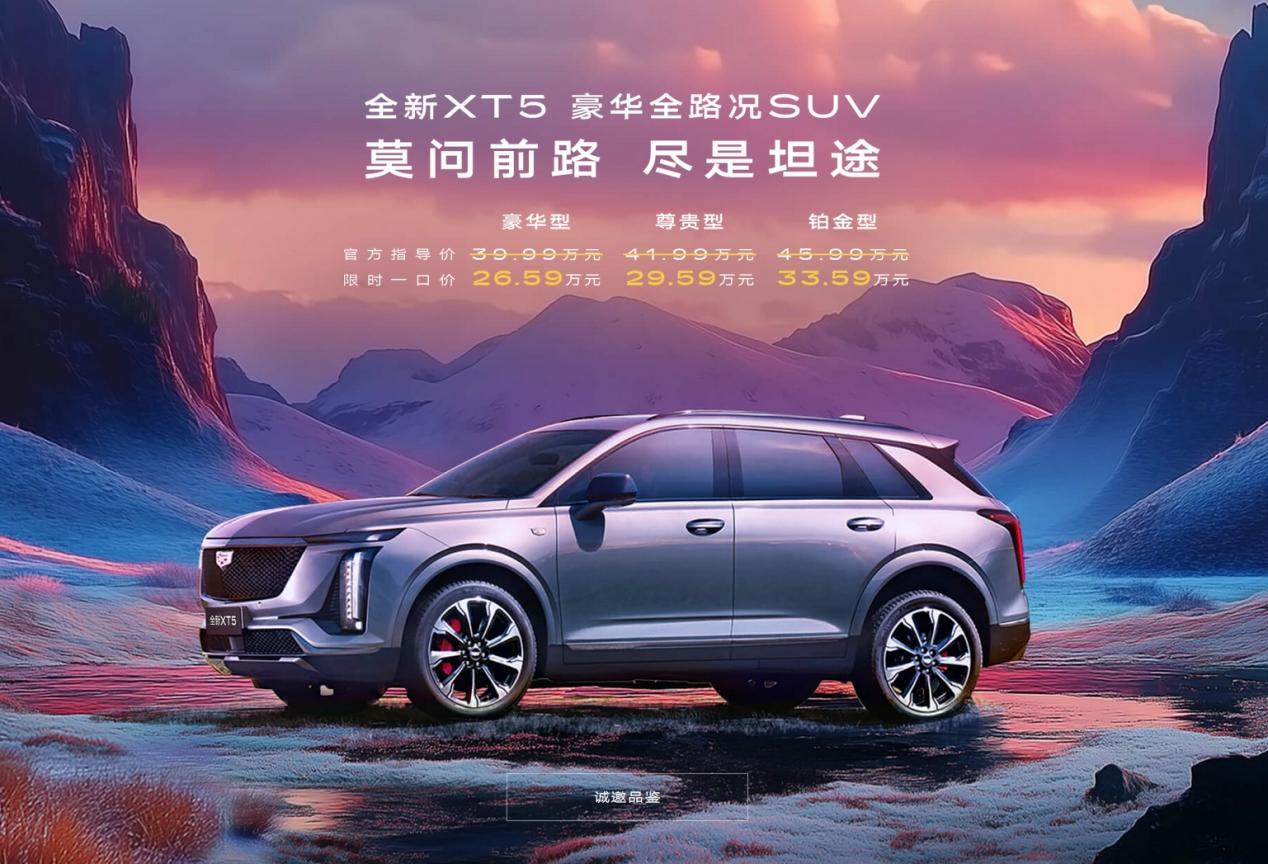
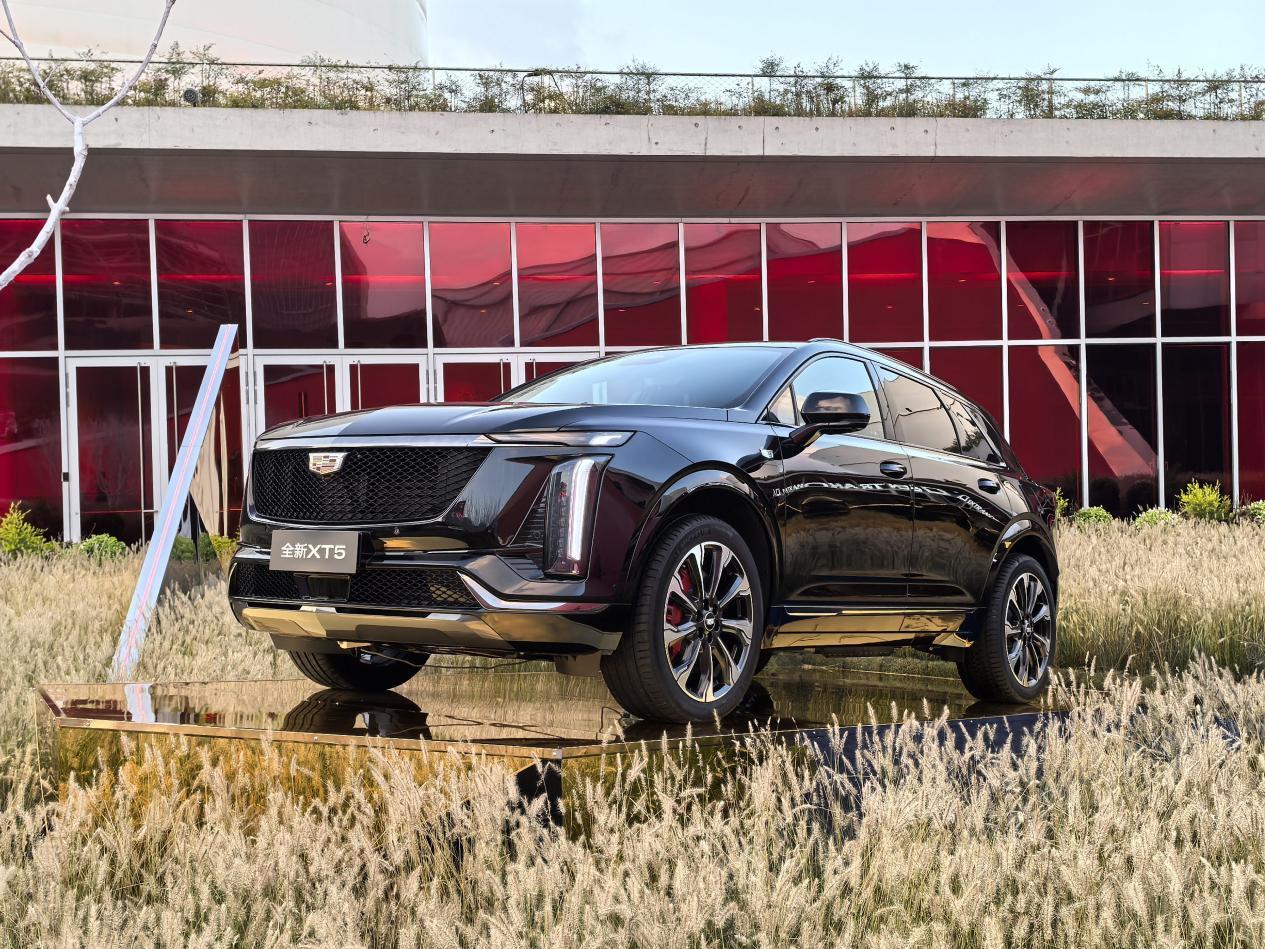
Cadillac XT5 went on the market, with a limited time of 265,900, so you don’t have to wait for the party!

The newly announced price is 399,900-459,900, and the limited-time price is 265,900-335,900, which is cut by one third.

WeChat screenshot _20240928204326

autohomecar__ChxkPmb30FSAPC4PAEJxZfphKGA056

In fact, it is very clear that the official is making a show of the guide price, and the terminal is still engaged in the one-price business of the new power. Everyone doesn’t have to wait for the discount. Now, if you buy it, it is the bottom.

WeChat screenshot _20240928204937

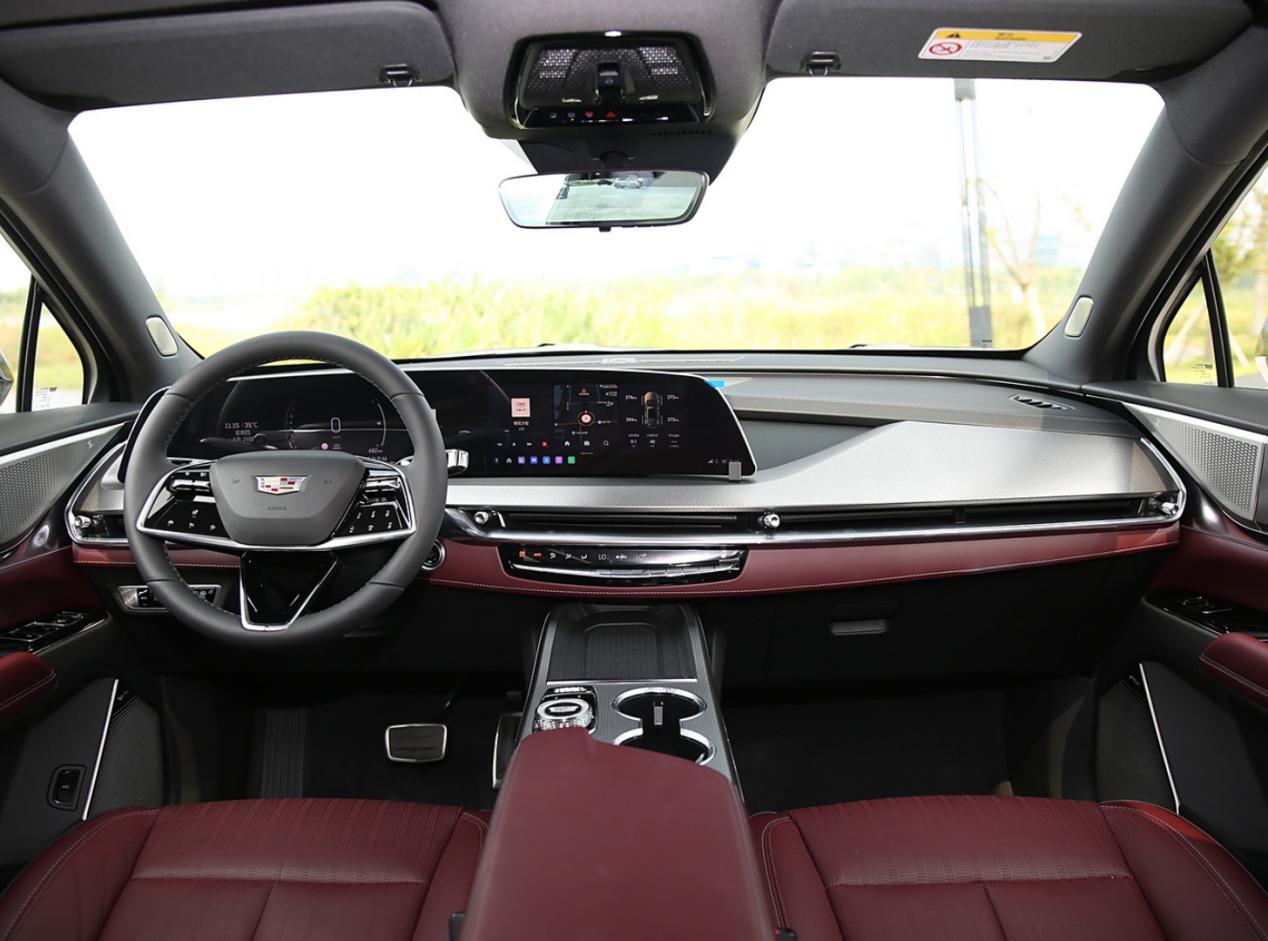
From 265,900 onwards, it comes standard with 2.0T+48V+9AT power combination, four-wheel drive, FSD variable damping suspension, 8155 chip, L2 assisted driving, 33-inch central control, electrically adjustable seat and electric tailgate. The basic configuration is completely sufficient, that is, the standard Q5L product. At present, the Q5L terminal is almost the same price, but it will be replaced. XT5 is a brand-new car system with higher configuration.

Buick Envision S vs. Volkswagen Explorer: Can 1.5T Really Win Over 2.0T After Hardcore Testing?

Nowadays, many car companies like to match different engine power levels according to different vehicle configurations. For example, BMW’s 2.0T is divided into three grades from 18, 20 to 28i, while Volkswagen’s 2.0T EA888 also likes to adjust different power levels to distinguish between different price points. This is the familiar 330TSI and 380TSI.

So who is more powerful between the 2.0T engine with reduced power of the 330TSI and the 1.5T turbocharged engine of the "full blood version"? In order to find out, we compare two mid-size SUVs of the same class and price this time – the new Envision S 1.5T and the Tanyue 330TSI. In the face of a series of hard core tests, which one performs more comprehensively?

The biggest difference between this new Envision S and the old model is the replacement of the Buick Avatar 1.5T engine. Although the price is similar to the Tanyue 2.0T low-power 330TSI model, from the parameter point of view, the Envision S weighs 1710kg, and the new 1.5T engine outputs 155kW power and 270Nm torque, with a general-purpose 9AT gearbox. The weight of Tanyue’s car is less than 1700kg, and the parameters of the low-power 2.0T are 137kW and 320Nm, which match the familiar DSG gearbox.

One has more power and one has more torque.

Of course, since you want to compare the two engines, you must compare them in multiple dimensions. After all, this can better reflect the hard indicators than the technical parameters.

The dimensions involved in this review include the following aspects:

100 km acceleration

● 100 kilometers braking

● Control stability

● NVH

● Fuel consumption

Driving on mountain roads

From the perspective of daily driving experience, because the new Envision S is equipped with an efficient 48V light hybrid system. Although the improvement of light mixing to power will not be too obvious, it can achieve smoother driving at medium and low speeds, and the quality of start and stop has also been greatly improved. The sense of intervention is very slight, so this STT does not need to be turned off at all during daily driving, and it is no longer a tasteless function.

The powertrain of the EA888 + DSG on Tanyue is more familiar to everyone. In fact, the Volkswagen models are very balanced in driving experience, and there will be no obvious problems. However, compared with the Avatar 1.5T + 48V combination of the Envision S, the start-stop quality of Tanyue is much worse, with large or small jitter every time.

However, the DSG transmission is still very smart. It is very easy to follow the car when driving in the urban area. It can match you with the correct gear and power output every time, and the quality of the upshift and downshift is also good. However, everyone knows that the double clutch is not good.

The driving experience of the chassis, I personally think Buick is better. In urban areas, you will often encounter some manhole covers, speed bumps, and damaged roads crushed by trucks. The Envision S can handle these shocks very well, without obvious aftershocks, and is well isolated from the sound of the impact. The sense of advanced is very good.

Although Tanyue was a Volkswagen product, its driving texture did not resemble the chassis performance of a serious European car. Under some undulating roads, the front and rear attenuation balance of Tanyue was relatively poor, and the pitch was obvious. In addition, when encountering some large impacts, Tanyue’s impact was suppressed relatively poorly, and the sound was too loud. At the same time, you could hear the resonance sound of the frame metal, and you felt that the car’s sense of precision and advanced were relatively poor.

Buick’s interior materials have always been very advantageous in the same level, Envision S is no exception, the NVH of the whole vehicle is very good, the sound insulation and quiet performance are completely worthy of this price, the front row is still double laminated glass, so when driving at high speed, in addition to the obvious wind resistance behind the B pillar, the rest like road noise and fetal noise are suppressed better.

Tan Yue’s road noise and fetal noise are slightly larger, and the wind resistance is generally controlled, and obvious wind noise can be heard above 100kph near the A pillar. At the same time, when the vehicle is driving under continuous vibration road surface and large particle asphalt road surface, the vibration and sound of the vehicle are more obvious, and the sound insulation performance of the chassis is poor. Rumbling road noise can often accompany driving.

Regarding fuel consumption, we can’t help but reveal that in the end, we traveled a total of nearly 117 kilometers throughout the day, including urban areas, national highways, highways, and mountain roads. In the end, the Envision S showed fuel consumption of 8.1L/100km, and the Tanyue 330TSI was 8.3L/100km.

And according to the final refueling situation, the actual fuel consumption is calculated, the Envision S is 8.13L/100km, and the Tanyue is 8.33L/100km. The appearance and actual fuel consumption performance of the two cars are very accurate, and the overall fuel consumption difference is not particularly large. Another difference to note is that the Tanyue 330TSI needs to add 95 #gasoline, while the Envision S only needs to add 92 #to eat coarse grains.

Driver’s summary:

Overall, the two cars have similar price and volume, and they are both models with good product power in this class. However, after switching to the Avatar 1.5T engine, the Envision S has a stronger driving texture, better handling experience, and better NVH performance than the Tanyue, and the economy is also better. As a Volkswagen brand product, I personally think that although the comprehensive product power is still very good, at least in the powertrain part, the 2.0T engine is placed in front of the Buick 1.5T engine, and the overall performance gap is regrettable.

Text | MOK

Wang Jianlin "went ashore"?

Wang Jianlin could finally breathe a sigh of relief.

"Daily Economic News" reporter learned from the official website of Wanda Group that on December 12, Pacific Alliance Investment Group(PAG)And Dalian Wanda Business Management Group(Hereinafter referred to as Wanda Business Management)Joint announcement of the signing of a new investment agreement. PAG Investment Group will work with other investors to redeem its investment in Zhuhai Wanda Commercial Management Group upon the expiration of its investment redemption period in 2021(Hereinafter referred to as Zhuhai Wanda Business Management)And reinvest.

It is reported that the investment amount of existing investors in Zhuhai Wanda Commercial Management in August 2021 is about 38 billion yuan, of which the investment amount of PAG Investment Group is about 2.80 billion US dollars(About 18 billion RMB), Existing investors enjoy redemption rights in the original investment arrangement. According to the new agreement, Wanda Commercial Management holds 40% of the shares, which is the single largest shareholder. Several existing and new investor shareholders such as Pacific Alliance Investment Group participate in the investment, with a total shareholding of 60%. On the issue of listing, the new investment will no longer set up a gambling agreement.

This also means that there are 18 days left until the final IPO time.The gambling pressure of Wanda Commercial Management has been basically eliminated.

It is worth noting that,This investment is also a workout.Therefore, Wanda has also paid a certain proportion of the equity price.

First, exchange of equity for investor consent

For Wanda Commercial Management, by the end of 2023, the greatest pressure will be the arrival of the listing and betting period.

In August 2021, Wanda Commercial Management and Zheng Yutong family, Country Garden, CITIC Capital, Ant, Tencent, Pacific Alliance Investment Group and other 22 institutional investors signed a gambling agreement. The above investors invested about 38 billion yuan in Zhuhai Wanda Commercial Management, of which Pacific Alliance’s investment is about 2.80 billion US dollars(About 18 billion RMB)

According to the gambling agreement, if Zhuhai Wanda Commercial Management fails to complete the listing work by the end of 2023, Wanda Commercial Management is obliged to repurchase shares from the above investors, and the repurchase amount exceeds 30 billion yuan.

According to the latest agreement signed between Pacific Alliance Investment Group and Wanda Commercial Management, upon the expiration of the investment redemption period in 2021, Wanda Commercial Management will be required to redeem the investment before Pacific Alliance Investment Group will cooperate with other investors to reinvest in Zhuhai Wanda Commercial Management.

Image source: Wanda Group official website

PAG is an Asia-focused private equity firm with a portfolio of private equity, real estate, and credit and markets investments. PAG’s more than 300 investment professionals are located in 15 offices around the world and manage more than $55 billion of assets for nearly 300 institutional fund investors worldwide.

An industry insider pointed out to every reporter that Zhuhai Wanda Commercial Management raised 38 billion yuan at the Pre-IPO price of 25 yuan per share. According to the gambling agreement, Wanda Commercial Management not only has to redeem 38 billion yuan, but also needs to pay 12% interest. One way to pay for this redemption is in cash, and the other way is equity replacement. From the current situation, Wanda is more likely to use equity replacement.

After the signing of this agreement, Zhuhai Wanda Commercial Management is 40% owned by Wanda Commercial Management, making it the single largest shareholder. Pacific Alliance Investment Group and several other existing and new investors have participated in the investment, with a total shareholding of 60%.

According to the prospectus updated on June 28, Zhuhai Wanda Commercial Management is currently owned by Wanda Commercial Management, Zhuhai Wanying, Yinchuan Wanda, the board of directors and senior management personnel, and investors, respectively, holding about 69.99%, 8.83%, 0.01%, 0.02%, and 21.17% of the shares. Among them, Zhuhai Wanying and Yinchuan Wanda are also wholly-owned subsidiaries of Wanda Commercial Management. According to this, Wanda Commercial Management jointly holds about 78.83% of Zhuhai Wanda’s shares.

This also means that,Wanda Commercial Management obtained investor consent in the form of equity replacement.However, the specific shareholding ratio of PAG and other institutional investors is not yet known.

In response to the signing of the new agreement, Wanda Commercial Management said that it will work with important shareholders such as Pacific Alliance Investment Group to further optimize the corporate governance of the company, maintain the stability of the management team, and jointly support the long-term development of the company. The new agreement also reflects investors’ high recognition of Zhuhai Wanda Commercial Management’s growth potential and its operating capabilities.

Since the above existing investors invested in 2021, Zhuhai Wanda Business Management has exceeded the performance target for three consecutive years, with after-tax income of 23.50 billion yuan in 2021, 27.10 billion yuan in 2022, and 27.10 billion yuan in 2023(Estimated)29.30 billion yuan, with an average annual growth of about 12%. After-tax profit is 5.30 billion yuan in 2021, 7.50 billion yuan in 2022, and 2023(Estimated)9.50 billion yuan, an annual growth rate of about 34%. In the past three years, Zhuhai Wanda Commercial Management has paid a total of about 10 billion yuan in taxes, and the dividends to shareholders are 4.60 billion yuan in 2021, 6.70 billion yuan in 2022 and 2023(Estimated)8.50 billion yuan.

As of November this year, Zhuhai Wanda Commercial Management operates 494 large commercial centers, of which 290 are commercial centers owned by Dalian Wanda and 204 are third-party asset-light commercial centers. In the past two years, the number of commercial centers managed by Zhuhai Wanda Commercial Management has increased from 417 to 494, an average annual growth rate of about 9%. Zhuhai Wanda Commercial Management is now the world’s largest commercial management company in terms of commercial area under management.

2. Selling items other than the "asset package" to activate cash flow

In fact, this year,In order to revive its cash flow, Wanda Group has sold its assets several times.

On July 23 this year, Wang Jianlin will film in Beijing(SZ002739, stock price 12.45 yuan, market value 27.133 billion yuan)The controlling shareholder of Beijing Wanda Investment Co., Ltd. transferred 49% of the shares to Shanghai Ruyi Investment Management Co., Ltd. for 2.262 billion yuan(Hereinafter referred to as Shanghai Ruyi)

On December 6, Wanda Film announced again that the actual controller, Wang Jianlin, plans to transfer his 51% stake in Beijing Wanda Investment Co., Ltd. to Shanghai Ruyi.

Image Source: Wanda Film Announcement

On the same day, according to the surging news, Zhuhai Wanda Commercial Management revealed in the process of communication with investors that Wanda Group plans to sell its Wanda Plaza in first- and second-tier cities in exchange for liquidity, and is negotiating with insurance institutions.

This year, the sale of Wanda Plaza is not the first time. The most recent one was on October 8 this year, when Guangxi Hepu Wanda Plaza was sold to Guangxi Beihai local real estate enterprise Hepu Wanghe Real Estate Co., Ltd. According to public information, in April 2021, Wanda Plaza was stationed in Hepu, Beihai, and the project officially opened in January 2022. Hepu Wanda Plaza has also become Wanda’s first county Wanda Plaza in Guangxi.

The transfer of the project comes just a week after Wanda Commercial Management transferred a 100% stake in its Shanghai project, Shanghai Wanda Plaza Real Estate Co., Ltd. According to Qichacha, on September 28, Shanghai Wanda Plaza Real Estate Co., Ltd. underwent industrial and commercial changes. The original wholly-owned shareholder Wanda Commercial Management withdrew and added Shanghai Jiayuan Management Consulting Partnership(Limited Partnership)Wuhu Puyu Equity Investment Partnership(Limited Partnership)At the same time, the legal representative was changed from Zhang Jing to Fengshun, and the main personnel were also changed.

The Shanghai Jiayuan Management Consulting Partnership is held 90.91% by our investment holding limited liability company, and our life insurance joint stock company is indirectly held.

The Shanghai Zhoupu Wanda Plaza is also the fourth Wanda Plaza that PICC has taken over this year. In May this year, PICC took over three projects from Wanda Commercial Management: Shanghai Songjiang Wanda Plaza, Jiangmen Taishan Wanda Plaza and Qinghai Xining Wanda Plaza. In addition, China Huarong took over the Wanda Plaza project on Xinhan Street in Wuhan.

Every time the reporter combed the Zhuhai Wanda Business Management prospectus, he learned that,The above-mentioned project subject companies are not included in their listed assets under management.For example, Shanghai Wanda Plaza Real Estate Co., Ltd. does not appear in the prospectus, but a company named Shanghai Wanda Plaza Commercial Management Co., Ltd. appears.

This article is from the WeChat official account:Each property (ID: Real-estate-circle)Author: Chen Li, Editor: Wei Wenyi

Longcheng Decoration creates a unique whole house decoration, winning the love and trust of consumers

On June 24, this website reported that Longcheng Decoration has created a unique whole-house decoration, winning the love and trust of consumers. In today’s pursuit of quality life, home decoration is no longer a simple space arrangement, but an all-round pursuit of individuality, taste and environmental protection. Longcheng Decoration, with its unique whole-house decoration service, not only meets consumers’ personalized needs for home decoration, but also wins wide recognition in the market for its environmentally friendly and professional quality.

Environmental protection first, leading the new trend of green home

In today’s society where environmental protection has increasingly become a consensus, Longcheng Decoration has kept pace with the times and integrated environmental protection concepts into every aspect of home decoration. Its whole house decoration service is based on new environmentally friendly materials such as integrated wall panels, which not only ensures the environmental performance of decoration materials, but also reduces pollutant emissions during the decoration process, creating a healthy and comfortable living environment for consumers. This persistent pursuit of environmental protection has made Longcheng Decoration stand out in the home decoration industry and win the favor of consumers.

Professionalism first, excellence creates quality home furnishing

Home decoration is a systematic project that requires professional design, construction and after-sales services. Longcheng Fitting is well aware of this, so in the whole house decoration service, it always adheres to the principle of professional supremacy. From the formulation of the design plan to the supervision of the construction process, to the follow-up of after-sales services, every link is strictly controlled to ensure the quality and effect of the decoration. At the same time, Longcheng Fitting is also constantly introducing advanced decoration technology and equipment to improve the construction efficiency and quality, and provide consumers with more high-quality and professional services. This spirit of excellence has enabled Longcheng Fitting to establish a good reputation in the home decoration industry.

Intimate service, tailor-made perfect home

Everyone’s home furnishing needs and aesthetics are different. Longcheng Fitting is well aware of this, so in the whole house decoration service, it always adheres to the principle of personalized customization. Whether it is the design style, material selection or construction details, it fully respects the wishes and needs of consumers, and tailors the perfect home that meets the needs of consumers. At the same time, Longcheng Fitting also provides one-stop service, from design, construction to after-sales follow-up, so that consumers do not need to bother and work hard, and easily enjoy the fun of home decoration. This kind of considerate service has won the trust and love of consumers.

Longcheng outfitUnique in the home improvement industry

Longcheng Decoration has won wide recognition in the market for its unique whole house decoration services. In terms of environmental protection, professionalism and service, Longcheng Decoration has achieved the ultimate, creating a healthy, comfortable and personalized home environment for consumers. This unique product and service makes Longcheng Decoration unique in the home decoration industry and becomes the preferred brand in the hearts of consumers. In the future, Longcheng Decoration will continue to adhere to the concept of "environmental protection, professionalism and service", continuously innovate and entertain, and bring consumers more high-quality and professional home decoration services.

Longcheng Decoration creates a unique whole-house decoration to win the love and trust of consumers. In this era of intense competition, only continuous innovation and progress can keep an invincible position. Longcheng Decoration has successfully won the love and trust of consumers with its unique whole-house decoration service. Let us look forward to Longcheng Decoration bringing us more surprises and wonders in the future!

One person, one brand, one model, Chinese power, a century of progress

Upward movement has been the unremitting pursuit of the Chinese people for more than a century.

There is a person who represents the Chinese people’s century-long rise on the international stage.

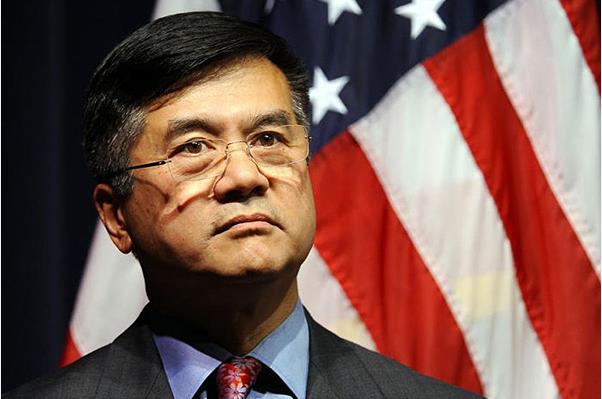
He is the most famous ambassador to China in history. Under his strong promotion, the valid period of Sino-US visas was extended from one year to 10 years. He served as the US Secretary of Commerce and the Governor of Washington State. He is a pioneer in actively promoting Sino-US economic and trade exchanges and represents the highest political achievement of the Chinese in the United States.

He is Gary Locke.

When it comes to Locke, there are two inseparable topics, one is his Chinese ancestry, and the other is his "American Dream". These two topics have been brought up repeatedly in Locke’s political career for more than 30 years, and eventually Locke’s story has been compressed into a "100 years in a mile".

"A hundred years ago, my grandfather came to Washington State on a steamer. He worked as a servant in a white family less than a mile from the governor’s mansion. It took our family a century to move from that house to the governor’s house."

From domestic helpers at the bottom of society to governors at the top, the realization of the Locke family’s dream of this mile is a figurative interpretation of the "upward" spirit of the Chinese people. This "upward" spirit is the blood flowing in the Chinese people’s bones. No matter where they are, it has been passed down several times to support the Chinese people’s efforts.

Today, in the context of globalization, the "upward" spirit in the soul of the Chinese people is more reflected in the "upward" road of Chinese brands.

There is a brand, which represents the Chinese brand in the Chinese car market.

It is a Chinese brand car company that started relatively late. It entered the automobile industry in 1997. In just 20 years, the cumulative sales volume has exceeded 5 million vehicles. It has focused on industry, technological innovation and talent training for many years, and has achieved rapid development. It has entered the world’s top 500 for five consecutive years, becoming the only Chinese private automobile company shortlisted.

It’s a Geely car.

Chinese brands have been struggling since birth, and they really started on a large scale in the 1990s. With China’s accession to the World Trade Organization in 2001, Chinese brands have not been cultivated enough to face the "big soldiers" of international auto giants.

Surrounded by foreign brands, Chinese brands represented by Geely have seized the market gap, worked hard to improve their product strength, and grew rapidly in the face of pressure and crisis. Although foreign brands continue to press down on Chinese brands, they have been impressed for three days. Chinese brands have changed their product image and brand perception, and have a strong ability to resist pressure and grow upwards.

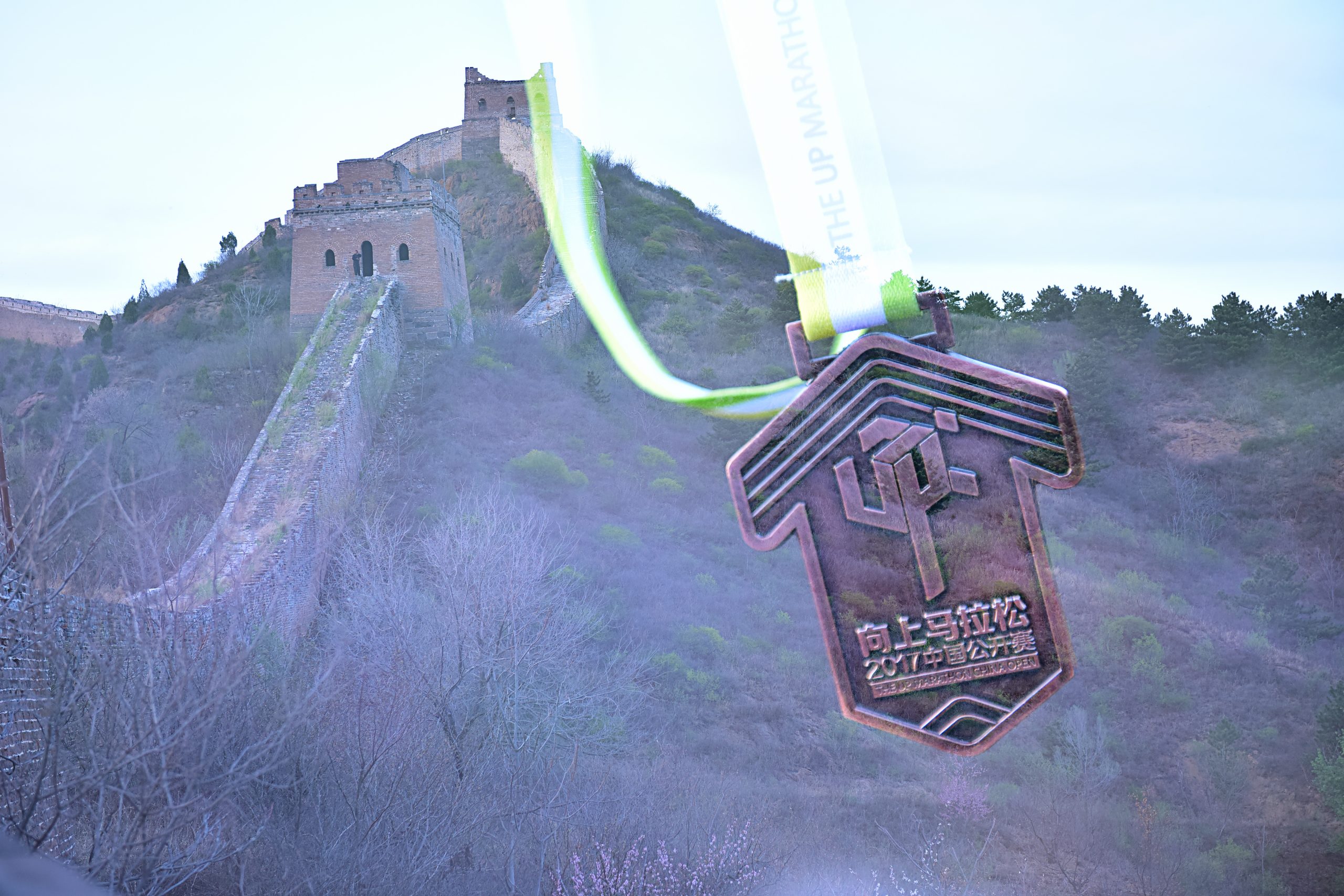
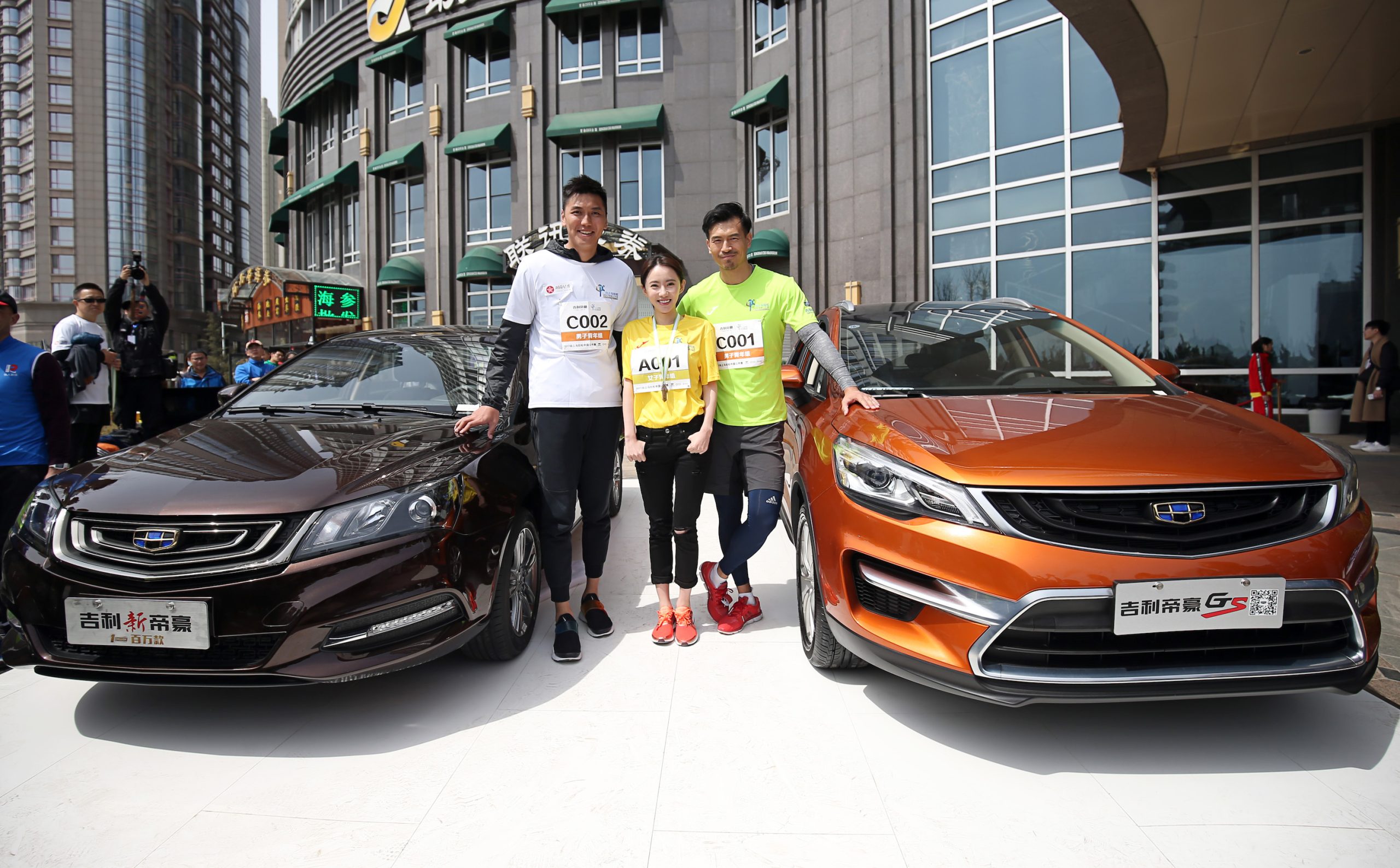
Just like the positive concept of the Upmarathon 2017 China Open hosted by Geely Automobile, Geely Automobile, as a leader of Chinese brands, draws on the national essence of pioneering and challenging, and constantly uses its own "upward" power to write the legend of China’s auto market and refresh the new height of Chinese brands. Lin Jie, vice president of Geely Automobile Group and general manager of the sales company, said, "Transmitting the’upward ‘spirit through the Upmarathon is Geely’s social responsibility as a Chinese car company, and also conveys the beautiful vision of Chinese auto brands to compete with the world’s mainstream car brands in the future through continuous upward mobility."

Today, with 20 years of growth, Geely Automobile has fought against the siege of international auto giants in the Chinese auto market and made great progress, not only in China, but also in the international market.

The rise of Chinese brands and their entry into specific products are the outstanding encirclement of each model.

There is a model that represents the breakout of Chinese cars in the sedan market.

It was born 7 years ago, with monthly sales breaking through 5,000, 8,000, 10,000, 20,000, sales breaking through 500,000 in 4 years, sales breaking through 800,000 in 6 years, and million sales in 7 years… It has refreshed the market sales growth rate and record of Chinese brand cars again and again, and has become the only Chinese brand sedan in the market segment to enter the top ten sales lists.

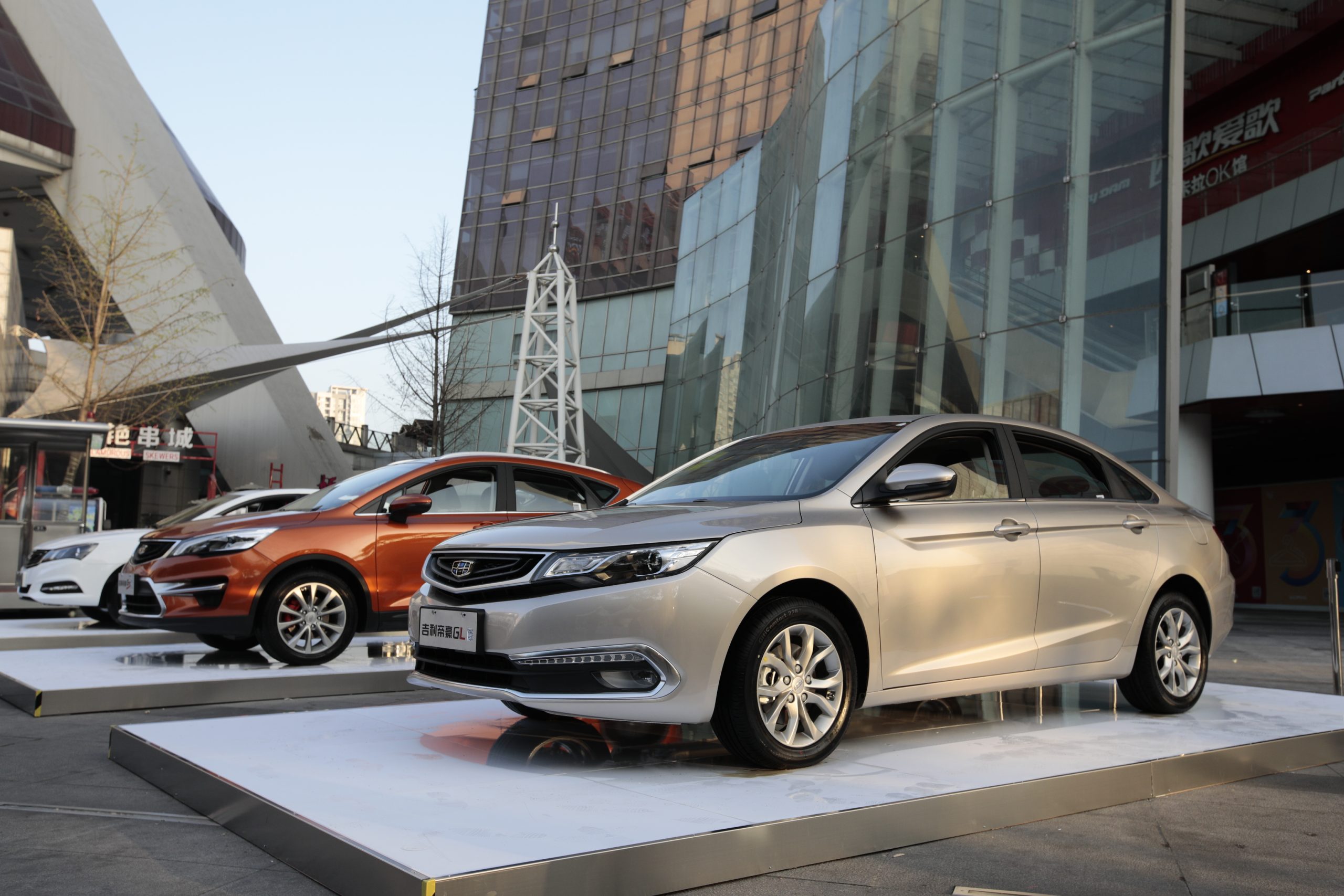
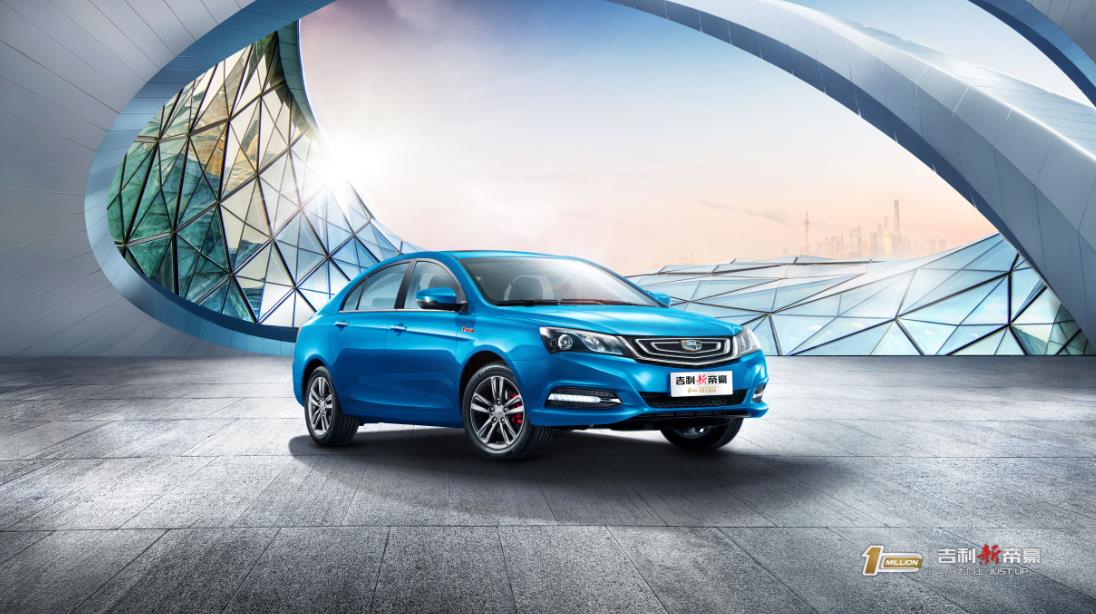
It’s the Geely Emgrand.

With the upward improvement of product power, Chinese brands continue to attack the A-class and even B-class car camps where foreign brands have long monopolized sales, but most of them still find it difficult to get a bowl of soup from it, so they have to turn to the incremental SUV market. Today’s car market is more and more divided, consumers are more and more picky about buying cars, and the attitude of retreating in distress is obviously unable to move forward in the market. The high-quality Geely Emgrand has blown a new wind of "upward" for Chinese car brands that once struggled to defend the mid- and low-end market, and the hope of competing with joint venture brands is within reach for the first time.

If only Emgrand is thriving, it is not enough to perfectly interpret "up". Geely Automobile follows the changes in market and consumer trends in a timely manner, clearly puts forward the "up" spirit of Emgrand, and implements balanced development at the product level. With the strong reputation foundation of Geely Emgrand, it starts from the A-level market and gradually realizes the coverage of various market segments.

As the mainstay of Geely Automobile, Emgrand integrates the brand spirit of "continuous improvement". After years of careful layout, the Emgrand family has fully covered all A-class market segments including A-class, A +-class cars, crossover SUVs, and new energy vehicles. The Emgrand brand has become a vanguard leading Geely Automobile’s product innovation and brand improvement.

Today, the "Geely 3.0 era" has become an industry consensus. The high-quality cars under Hunting are constantly popular, and strategic models such as Borui and Boyue reflect the upward energy of "China Intelligent Manufacturing". The success of Geely Emgrand has allowed Geely Automobile to firmly lock major market segments such as A-class cars, B-class cars, and smart SUVs into the territory of Chinese brands.

In today’s war-torn Chinese auto market, both Chinese and foreign brands may soon be eliminated if they do not make progress and make great strides forward. The Chinese brands represented by Geely Automobile and the Chinese sedans represented by Emgrand are able to stand tall and even break through the siege of joint venture brands because of the "upward" soul of the Chinese people flowing in their bones. And this is the power of the Chinese people to stand tall among the nations of the world!

Geely Galaxy L7 is on the market and plans to open 700 stores by the end of the year

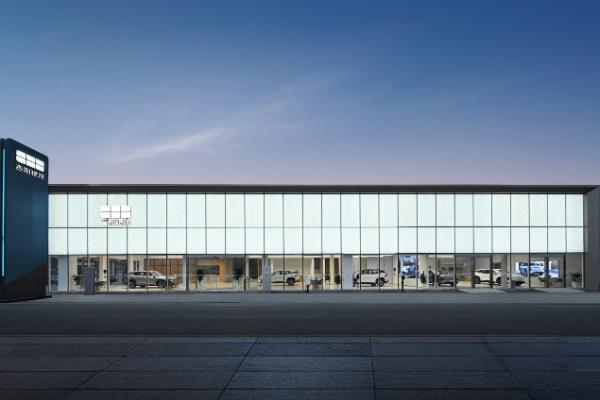
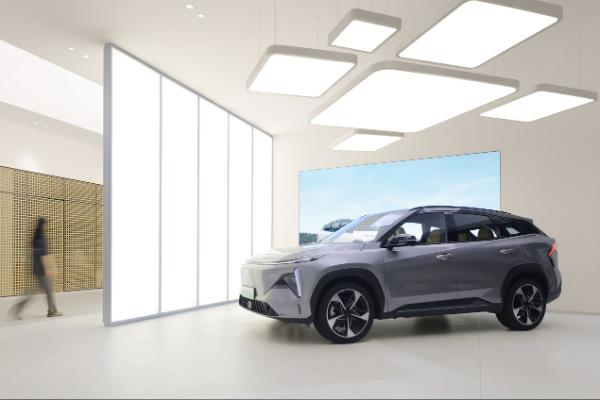
With the launch of Geely Galaxy L7, Geely Galaxy’s exclusive retail system is also fully new. On June 5, the "Opening Ceremony of Geely Galaxy Hundred Stores" was held at Geely Galaxy Xi’an Guoli Experience Center. With this as a prelude, 225 Geely Galaxy exclusive stores across the country opened simultaneously, with "a new channel ecology, a new service standard, and a new user experience", making user satisfaction the standard of Geely Galaxy.

Geely Galaxy’s exclusive retail system gives full play to the advantages of the compound franchise authorization system, and adopts the innovative practice of "digital exhibition hall + standardized experience" to bring users a more textured, warm and belonging car purchase and car experience. It is expected that within this year, Geely Galaxy will achieve the channel scale of 650-700 exclusive stores nationwide, of which the first 225 stores have been authorized and completed, and will come to users at "Galaxy Speed".

Constructing a New Channel Ecology for Composite Franchise Authorization

It’s not a good idea.Let more stores come to users

Geely Galaxy adopts a new channel ecosystem of compound franchise authorization, and the first batch of stores are mainly located in cities with a capacity of 150% in China’s new energy market.

In terms of agency distribution system, Geely Galaxy and partners jointly build user centers (4S stores), experience centers (city exhibition halls), display spaces (supermarket stores), and fully empower dealers in talent management, service standards, and digital operations to create a more transparent car purchase environment for users and a more efficient and convenient car purchase experience.

At the same time, Geely Galaxy will set up a number of brand centers (4S stores, Hangzhou, Shanghai, Shenzhen, Guangzhou, etc.) in first- and second-tier cities. These Geely Galaxy brand centers located in the city CBD are not only a display platform for users to fully understand Geely Galaxy, but also a demonstration center for Geely Galaxy’s user experience and service standards, a talent training center, and a multi-activity center for users. Play a role as a model and benchmark, and continue to empower other channel networks at all levels.

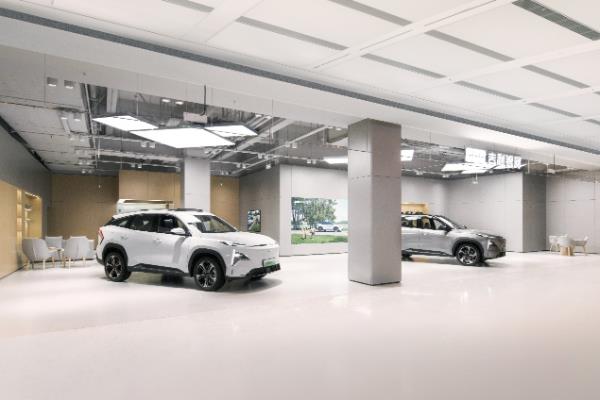
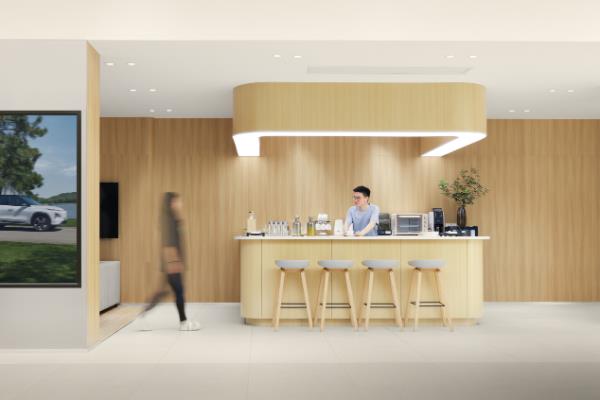
Every Geely Galaxy store is a "third living space" that brings together trendy technology and fun of life. The new stores are fully close to the core business district and life circle of the user’s living radius, and the car purchase experience is more transparent and the service standard is more uniform. Users no longer need to go out of the city to see and buy cars, and they can not only drive the new car home after eating and shopping, but also bring friends to the store to take a break.

It’s not a good idea.New service standards inject soul into user experience

It’s not a good idea.Start with user request, loyal to user satisfaction

Start with user requests, loyal to user satisfaction. At the same time as channel innovation, Geely Galaxy has created a new service standard around users.

In terms of store management, Geely Galaxy has developed a unified and rigorous service management system, and has comprehensively improved service standards through regular training and assessment, service quality evaluation, and in-store counseling.

At the talent level, Geely Galaxy has also formulated expert development plans such as test drive experts, experience experts, and delivery experts to provide corresponding professional services for users at different stages of car purchase in the store. At the same time, 100% full-staff advanced training is used in store talent training to form high-standard service quality from the source of talents, eliminate the chaos of "unprofessional and poor attitude", so that every user can enjoy the car purchase and car experience at home.

In addition to that, with the strong institutional support of Geely Automobile Group, Geely Galaxy has abundant service reserve resources to ensure that the needs of every Geely Galaxy user are fully met.

It’s not a good idea.Create a more transparent new car buying experience

It’s not a good idea.Digitally empowered

Geely Galaxy firmly believes that the user experience is the core competitiveness of the future new energy market. Based on the digital empowerment of the Star Smart Computing Center, Geely Galaxy has created a new user experience of "more transparent scenes, more exciting experiences, and more assured car purchases" with the concept of "refreshing the tradition".

At the daily operation level, considering the pain points of high communication cost and asymmetric information in the traditional 4S model, Geely Galaxy specially created a "digital exhibition hall" to connect the full link of user car purchase by digital means, and realize the double improvement of service efficiency and user experience. Users can skip the annoying bargaining link and place an order directly through the online payment platform to visually track the status of the vehicle anytime, anywhere.

Digital services are even more detailed. For example, when users book a test drive through the Geely Galaxy APP, they can even choose what beverage they want to drink on the day of the test drive and enjoy it directly at the store!

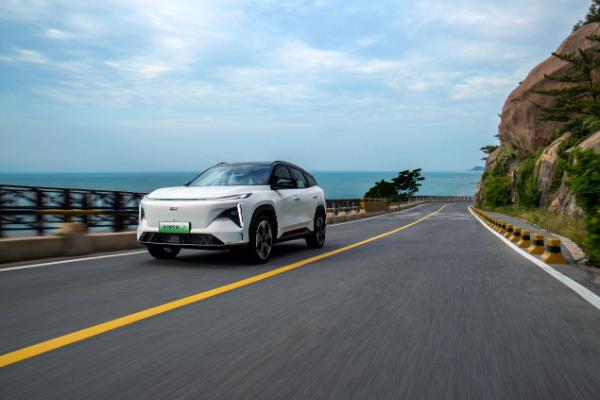
At present, the first model of Geely Galaxy series, Geely Galaxy L7, has been fully launched in major exclusive stores across the country, achieving "delivery on the market".

"A new generation of super intelligent electric hybrid SUV" Geely Galaxy L7, with Aegis battery safety system, a new generation of Raytheon electric hybrid 8848 power system, Zhiai cockpit and other leapfrog configurations, allowing consumers to spend hundreds of thousands of yuan, will be able to enjoy 300,000-level "real fragrance" enjoyment, open travel "will not be" new energy era!

It is understood that in addition to the Geely Galaxy L7, this year the Geely Galaxy series will also launch new models including the intelligent electric hybrid car L6 and the pure electric model E8, which will continue to bring high-value travel experiences to users.

Geely Galaxy will reshape industry standards with a new generation of high-value products and services, accelerate the promotion of Geely Automobile Group’s marketing services, and continue to meet consumers’ yearning for high-end travel.