Main gene seeks to go public, jellyfish gene company stops changing, and consumer-grade gene testing market divides.
With the Maine gene handing over to the Hong Kong Stock Exchange, consumer-grade genetic testing has once again entered the eyes of consumers. According to the data quoted in the prospectus of Main Gene, Main Gene has become the largest consumer-grade testing platform in China. From the specific product content, consumer-grade genetic testing refers to genetic testing for ordinary consumers, which was introduced to the China market around 2015, and 23 Rubik’s Cube and Jellyfish Gene were established in this year. Main Gene, which was established a year later, has become the only company in China that has made a profit in the consumer-grade genetic testing industry.
However, the situation of players on the same track is different. On February 20th, beijing business today reporter combed and found that the content update of jellyfish gene WeChat official account, another company in the industry, stopped in 2020, and its insiders said that personal business was no longer the focus of the company’s business. In September last year, there was news in the industry that Microgene, 23 Rubik’s Cube and Genebao were discussing the merger. The industry believes that the consumer-grade genetic testing market has reached a watershed.
Main gene shock listing
China’s largest consumer-grade genetic testing company is seeking a Hong Kong stock listing. According to the prospectus of Main Gene Disclosure, the company intends to invest the raised funds in the sales, marketing and commercialization of consumer-grade genetic testing and cancer screening services and products, and research and develop pipeline products.
Main Gene is a project hatched by Yu Rong, chairman of Mei Nianda Health. It was established in 2016 and has achieved profitability. According to the data in the prospectus, from 2018 to 2020, Main Gene achieved a total income of 195 million yuan, 123 million yuan and 203 million yuan respectively, and realized a profit of 22 million yuan, 29.7 million yuan and 79.1 million yuan respectively in the same period.
Consumer-grade genetic testing services and cancer screening services constitute two major business segments of Main Gene. Among them, consumer-grade genetic testing service is the revenue pillar of Main Gene, accounting for more than 90% of the total revenue. Consumer-grade genetic testing services for Main Gene include cancer risk assessment services, chronic disease risk assessment services, Covid-19-related testing services and other consumer-grade genetic testing services.
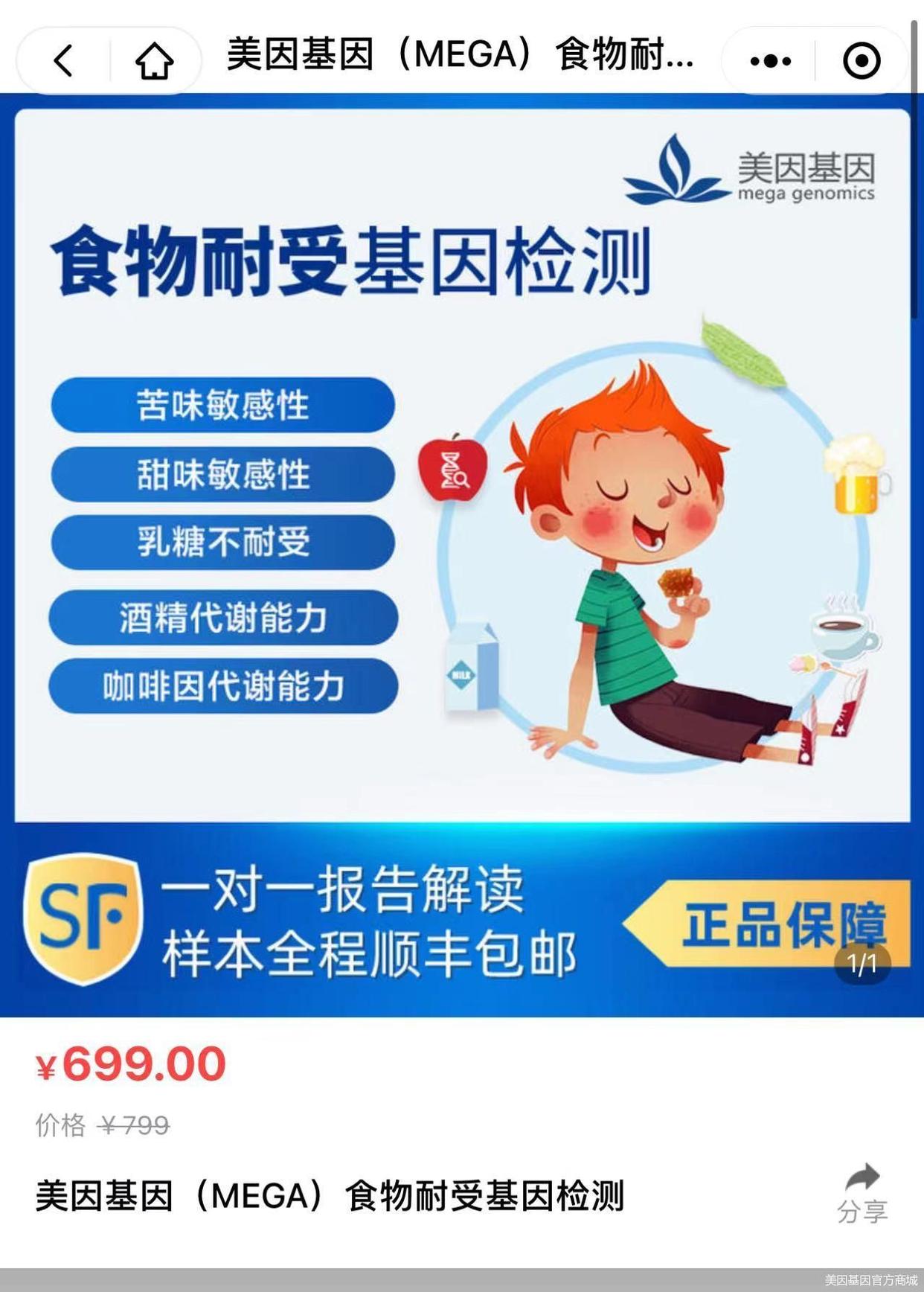
Beijing business today reporter saw in the official mall of Main Gene that the price of a genetic testing product for cancer risk assessment service is 699 yuan. Users take out the oral swab in the product, and each swab rubs the left and right inner walls of the oral cavity up and down about 20 times, then send the sample back to the testing center, and wait for the test report in 15-20 working days.
Main Gene quoted Jost Sullivan’s data in the prospectus, saying that according to the cumulative number of tests, Main Gene is the largest consumer-grade gene testing platform in China, one of the three largest consumer-grade gene testing platforms in the world, and the only enterprise in China that has made a profit in the consumer-grade gene testing industry.
As early as August 2021, Main Gene submitted listing application materials to the Hong Kong Stock Exchange, and then expired, which was another impact on the listing of Hong Kong stocks after its updated materials. In view of the reasons for listing in Hong Kong and the development of the market, beijing business today contacted Maingene, but no reply was received as of press time.
Silent market
Compared with the active phenomena such as price war and financing in 2017-2019, the domestic consumer-grade genetic testing market has cooled significantly in the past two years. The re-listing of Main Gene broke the long-dormant market.
The rapid development of domestic consumer gene testing industry is closely related to the development of American consumer gene testing companies such as Ancestry and 23andMe. As the first and second largest consumer-grade genetic testing companies in the world, Ancestry and 23andMe were established in 1996 and 2006 respectively. According to industry insiders, the industry developed rapidly around 2015, and a large number of domestic enterprises emerged, following the example of the United States and launching a large number of entertainment projects such as ancestral testing.
Microgenes, 23 Rubik’s Cube and Jellyfish Genes, which entered the market early in China, were all established in 2015. At the beginning of their establishment, they also focused on ancestral analysis, including genetic risks and drug reactions. In order to open the market and gain more users, the industry has experienced price wars. In August 2017, 23 Rubik’s Cube reduced the original standard package price of around 1,000 yuan, and the package price dropped from the previous 999 yuan to 499 yuan. Subsequently, the micro-gene followed suit and lowered the product price.
The heat has gradually warmed up. The three companies that were established earlier have successively obtained financing in 2018, and the industry has also welcomed new players. In January 2018, Microgene announced the completion of the B round of financing, and Jellyfish Gene completed the A round of financing. In March of the same year, 23 Rubik’s Cube announced the completion of the B+ round of financing of 100 million yuan. This year, Anzhen Health and Genebao were established successively. In October 2019, Genebao completed a series of financing of nearly 100 million yuan.
However, since 2020, there has been no new financing news from the industry. In the eyes of the industry, the consumer-grade genetic testing industry has developed late, and the domestic market is not fully aware of personal genes. Difficulties in obtaining customers and making profits have always been the pain points. Affected by the epidemic, the business development of companies has also been affected. In 23 Rubik’s Cube official micro, a consumer once pointed out how to prevent and control risks in saliva sample transportation; When testing in the laboratory, whether there are relevant protective measures and other issues are questioned.
Market differentiation
Impact on the capital market, holding a group to keep warm … The domestic consumer-grade genetic testing market began to differentiate.
Relying on the great health of the United States, the main gene has developed rapidly. According to the prospectus, in 2020, Main Gene conducted 2.7 million genetic tests, accounting for 65.8% of the market share (according to the number of tests).
In September last year, it was reported in the industry that Microgene, 23 Rubik’s Cube and Genebao were discussing the merger. Zheng Qiang, the founder of Microgene, confirmed the news to China Entrepreneur, but did not disclose the specific progress. In view of the progress of the negotiation, beijing business today reporter contacted Gene Bao, Microgene and 23 Rubik’s Cube respectively, and Microgene CTO Chen Gang said "I don’t know this matter". As of press time, Genebao and 23 Rubik’s Cube have not yet replied.
The development of jellyfish genes has also changed. The official Weibo of Jellyfish Gene stopped on June 28th, 2019. Under the last Weibo, some consumers asked questions about the delayed results of the genetic test report and the inability to download the App, but Jellyfish Gene did not reply to the above comments. The wechat WeChat official account of Jellyfish Gene stopped in February 2020 and was renamed as "Jellyfish Life Coach" in June 2021. So far, there is no new content update.
For business development and other issues, beijing business today reporter contacted Zhao Nan, co-founder and CSO of Jellyfish Gene. As of press time, the other party has not responded yet. Beijing business today reporter learned from the staff of Jellyfish Gene I that Jellyfish Gene’s business is still in progress, but its business focus is not on personal business. Earlier, an executive of Jellyfish Gene told the media that the company was still providing genetic testing services, but the business of "burning money" had stopped.
Beijing business today reporter Yao Qian