In Japan, the phenomenon of gnawing at the old is serious: 610,000 people aged 40-64 are "squatting at home".

Japan’s "abandoned houses" (Japan’s "financial-field" website)
Overseas Network, June 17th In Japan, the parasitic phenomenon of "NEET" has become a serious social problem. According to the data recently released by the Cabinet Office of Japan, among the people aged 40-64 in Japan, it is estimated that there are 613,000 "abandoned houses" who have not communicated with people outside their families for more than half a year and have stayed at home for many years, among which more than half of them have been "home-aged" for more than 7 years, and one in three lives on the financial resources of elderly parents.
According to Japan’s "Shangmao News Agency" reported on the 17th, a 60-year-old woman who lives in Takasaki City, Gunma Prefecture, Japan recently came to the consulting agency for help. She said that the second son in the family is nearly 40 years old and has not left his room for more than 10 years, telling him to ignore it. As I get older, my parents are getting old and weak, and I don’t know when to take care of my second son. "The second son himself should also worry about this problem. If you don’t do something now, what can you do in the future … "
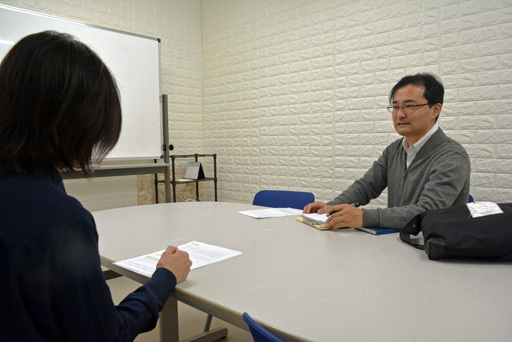
Nakazawa Chonghong receives the family members of "NEET" (Japan’s Shangmao News Agency)
Nakazawa Chonghong, the head of the consulting organization, began to contact with such problems five years ago. He said that he often received such mothers, all of whom had sons who had been "squatting at home" for a long time, and asked them questions such as "children don’t leave the room" and "no work for many years". "There are many parents who are unwilling to discuss with the people around them because the problem has become serious. Waiting to take care of these ‘ Needy people ’ Our family members are old and have died one after another, and such problems will become serious social problems. "
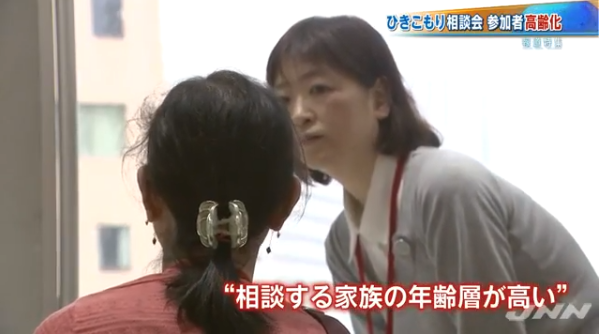
Tokyo held a "discussion meeting at home" attended by 29 social groups (Fuji TV)
Talking about the reason why the "neet" can’t leave the room, Japanese media said that often the parties and their families can’t explain it or can’t come up with a solution. Doctors have examined some "neet people" and found that they often suffer from symptoms such as comprehensive disorder, autism and panic disorder. Watanabe Toshiyuki, president of Watanabe Hospital in Takasaki City, said: "Family members should first discuss this situation with the third party, and it is most important to change the environment at home."
Japanese media said that "8050" is synonymous with the parasitic phenomenon of "NEET", meaning that 80-year-old parents take care of their 50-year-old children. According to a survey by the Japanese Ministry of Internal Affairs and Communications, there are currently 1.23 million middle-aged "neets" aged 35-59 in Japan, which is 2.2 times that of young people aged 15-34. In order to solve the increasingly serious "8050" problem, in 2018, the Japanese government allocated 1.3 billion yen (about 78 million yuan) to solve this problem. (Overseas Network/Wang Shanning)