What are the differences between influenza and parainfluenza viruses? What should I do if I get parainfluenza?
Original pediatric doctor Yan
In 1958, a paper in the New England Journal of Medicine announced the discovery of a new respiratory virus.
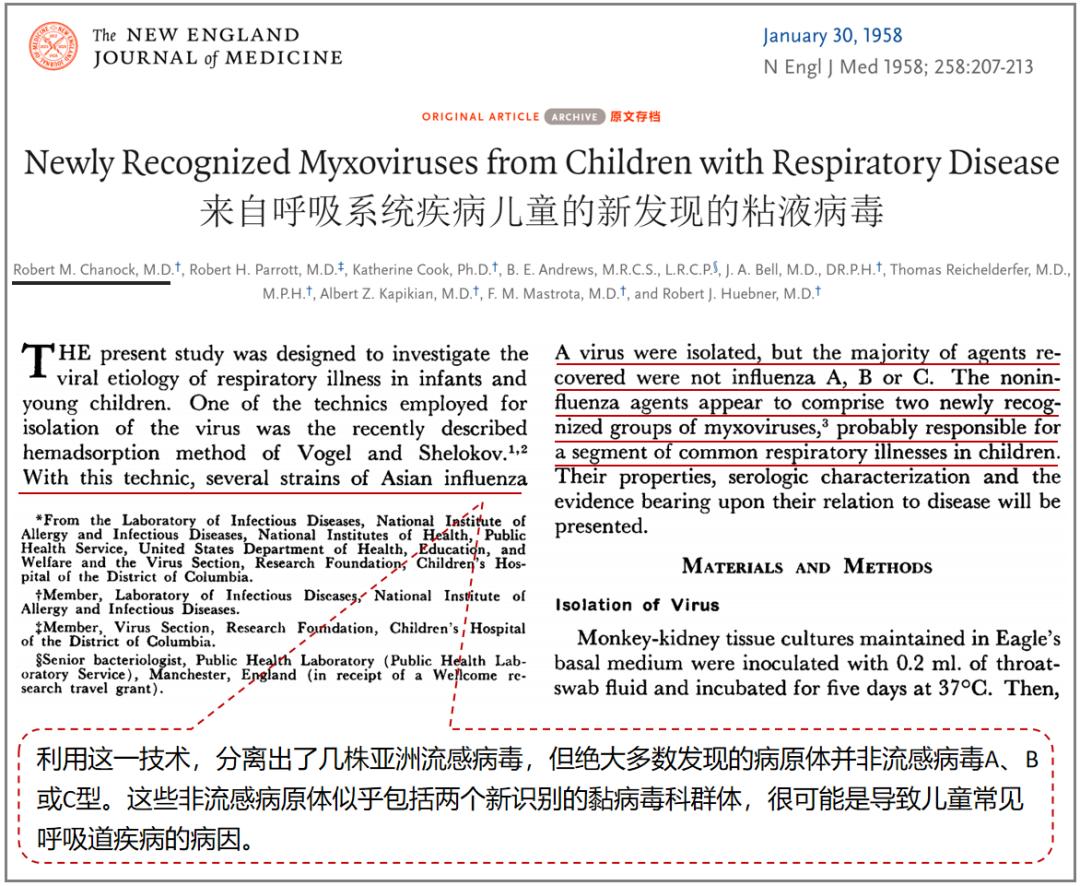
The researchers used the blood adsorption method to identify influenza viruses at that time, but found a new virus that did not have the antigenic characteristics of influenza viruses A, B and C, but could also cause respiratory symptoms in children.
This virus is called hemadsorption virus in this paper, and then Parainfluenza Viruses(PIV), which is translated into parainfluenza virus.
The first author of this paper, Dr. Charnock, is a child infectious disease expert and virologist.
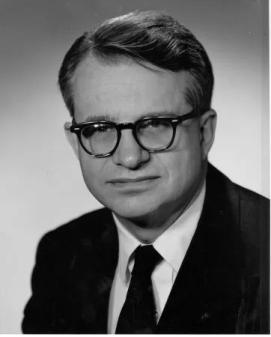
(Robert M. Chanock)
Dr. Charnock has been devoted to the study of respiratory pathogens in children for a long time, and has made many breakthroughs in this field.
He has discovered four serotypes of parainfluenza virus.
Another pathogen he discovered is more famous, that is Respiratory Syncytial Virus. I introduced him in this article, and those who are interested can click on the title to learn.
In 1960s, with the assistance of Charnock, Hayflick confirmed that the pathogen causing atypical pneumonia was Mycoplasma Pneumoniae and classified it as bacteria. This discovery subverted the mainstream view at that time, that is, atypical pneumonia was caused by viruses.
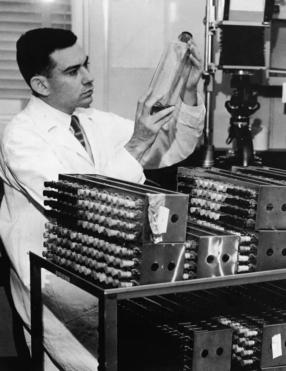
(Leonard Hayflick)
01
Influenza virus Vs parainfluenza virus
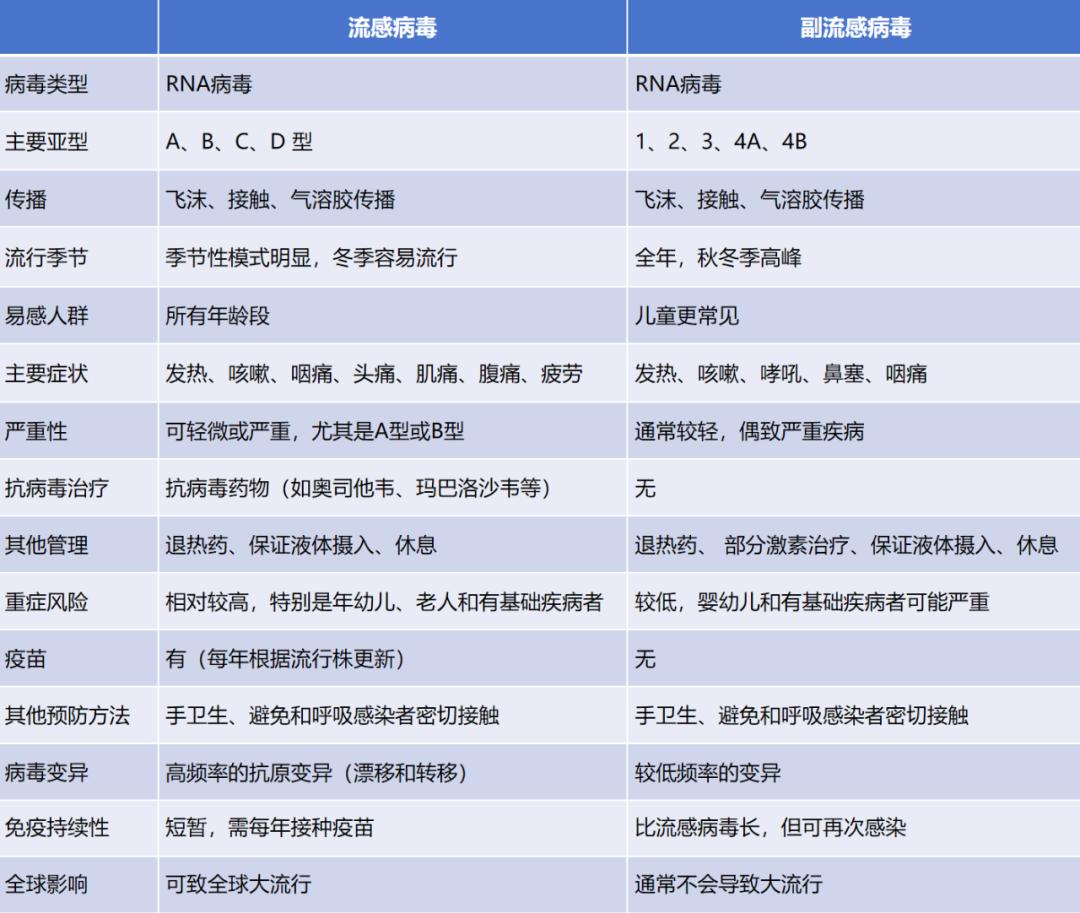
Influenza virus and parainfluenza virus are common pathogens in respiratory tract. Although they have similar names, they belong to different virus families, and the symptoms after infection are also different.
Because influenza virus is more harmful, more research has been invested in the world and more achievements have been made. For example, there are vaccines (although the effect is not satisfactory) and several anti-influenza drugs. After being infected with parainfluenza virus, we can only deal with it symptomatically.
The characteristics of the two pathogens and post-infection management methods are compared as follows:
02
Parainfluenza virus
With the popularization of detection technology, more and more out-patient children are identified as parainfluenza virus (PIV) infection. Therefore, it is necessary for us to have a deep understanding of PIV.
PIV infection is very common in children, and almost all 5-year-old children have been infected with PIV. Therefore, if the child is infected with PIV, I hope parents will not be nervous.
There are four serotypes of PIV, namely PIV-1, PIV-2, PIV-3 and PIV-4. Type 4 can be further divided into two categories: A and B..
PIV mainly infects respiratory tract, but the epidemic season and post-infection symptoms of different serotypes of PIV are different, and the severity of symptoms is mainly related to the replication site and serotype of the virus. Whether the patient has a basic disease also determines the prognosis.
1. PIV-1 and PIV-2 are mainly replicated in epithelial cells of upper respiratory tract, so they most often cause upper respiratory tract infection and wheezing (laryngotracheitis) in infants.
2. PIV-3 mainly replicates in the lower respiratory tract, so it can cause bronchiolitis and pneumonia (mainly affecting children under 1 year old).
3. PIV-4 is mainly related to the upper respiratory tract infection of healthy children, and its symptoms are usually mild, with little clinical significance.
However, PIV-1 and PIV-2 can also cause severe lower respiratory tract infection, while PIV-3 can also cause mild upper respiratory tract infection.
The immunity after PIV infection will not last long, so repeated infections are common in life. In children with normal immune function, the symptoms of reinfection are often lighter than those of primary infection, and are usually limited to the upper respiratory tract.
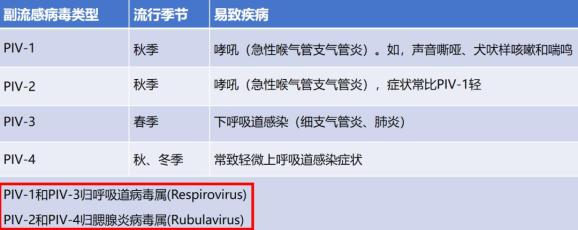
The vast majority of patients infected with PIV will not cause serious problems, but it can cause serious infection in individuals with impaired immune system or chronic respiratory diseases.
Inhaled ribavirin has been tried for severe pneumonia caused by PIV infection in immunocompromised patients. The new antiviral drug DAS181 (inhaled sialidase fusion protein) and hemagglutinin neuraminidase inhibitor also showed curative effect on some severe PIV patients. However, the above treatment is only a clinical trial treatment and has not been officially approved.
03
Parainfluenza virus can cause mumps?
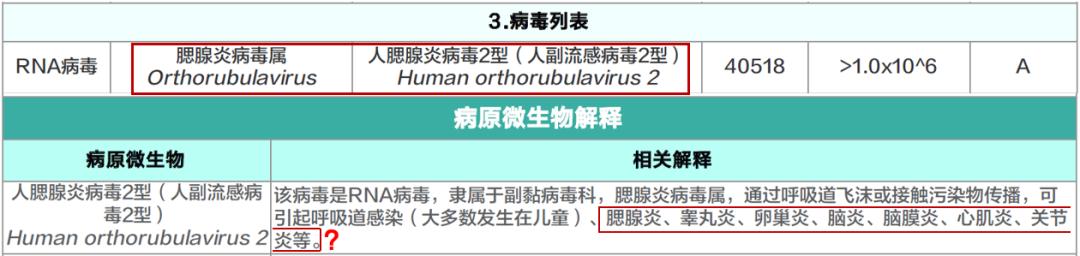
When parents see this explanation, it is estimated that they are worried again. Is it possible for children to have mumps, orchitis, oophoritis and encephalitis?
Can parainfluenza virus -2 infection cause mumps?
I believe in the targeted sequencing results of the testing company very much, but I think it is wrong to explain such pathogenic microorganisms.
The original explanation of the testing company is: the virus is RNA virus, belonging to paramyxovirus family and mumps virus genus. It can cause respiratory infection (mostly in children), mumps, orchitis, oophoritis, encephalitis, meningitis, myocarditis and arthritis through respiratory droplets or contact with pollutants.
The contents in bold are all right, but the aerosol transmission mode is omitted.
We should know that PIV rarely causes non-respiratory complications, and only a few cases can have meningitis, myocarditis and pericarditis.
The italicized lines are actually many possible outcomes after mumps virus infection, and are not the characteristics of PIV-2 infection. Therefore, it should not be exaggerated for me to say that it is Zhang Guan Li Dai.
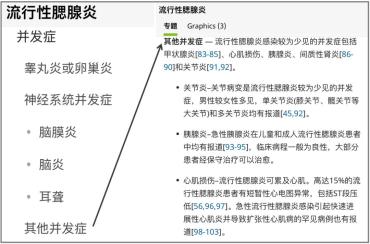
(▲ from Uptodate: mumps)
In my opinion, it is enough for testing companies to provide reliable pathogen test results, which is their job.
What will happen to a patient infected with these pathogens? Doctors will analyze according to the specific situation of patients, which is the business scope of doctors.
Testing companies tell patients (or their families) all possible infection outcomes, which can only increase their anxiety. If the doctor tells me the same thing, I will think that the doctor is unqualified.
Even if the testing company thinks it is necessary to provide relevant explanations of pathogenic microorganisms, it is necessary to ensure the accuracy of the information. Otherwise, providing a wrong explanation (mistaking PIV-2 for mumps virus) can only add to parents’ anxiety.
PIV-2 does belong to mumps virus, but PIV-2 is not mumps virus. Not all viruses of the same genus cause similar symptoms.
Why does the industry classify PIV-2 and PIV-4 as mumps virus?
This is an academic problem of virus classification. Virologists mainly classify viruses according to their genetic characteristics, evolutionary relationships and structures.
Because PIV-2 and PIV-4 have similar genetic relationship and similar structure with mumps virus, they are classified into mumps virus genus.
Although they belong to the same genus, PIV-2 and PIV-4 have obvious differences in disease symptoms caused by mumps virus.
For example, PIV-2 and PIV-4 mainly cause respiratory symptoms, while mumps virus causes human mumps. Typical symptoms are parotid swelling, fever, headache and myalgia, and may also be complicated with orchitis, oophoritis and encephalitis.
04
PIV-1, 2 and wheezing
Wheezing, also known as acute laryngitis (laryngotracheitis), of which 60%-75% is caused by PIV-1 and PIV-2 infection.
Wheezing is a common disease in infants and young children. I have written an introduction to the relevant management knowledge. Those who are interested can click on the title to learn. However, the management details of growling can not be explained by these 10 questions.
When children growl, the key is to identify the severity.
Because different degrees of severity correspond to different intervention methods, mild people may be able to relieve symptoms by choosing humidified air. Some people need oral dexamethasone (or prednisone), intramuscular injection of dexamethasone or atomized inhalation of budesonide, some people need atomized adrenaline, and some people need extreme measures (for example, establishing artificial airway).
It is precisely because some children with wheezing will have serious respiratory obstruction that some parents will be very worried once their children have wheezing symptoms (hoarse or irritating "empty" cough).
Once parents panic, children will often be over-intervened, so I think it is necessary for parents of infants and young children to know the management details of growling, and those who are interested can scan the code to learn.
reference data
1. www.science.org/doi/10.1126/science.126.3269.358.b
2. Feigin and Cherrys Textbook of Pediatric Infectious Diseases. 8th
3. Principles and Practice of Pediatric Infectious Diseases. 5th
4. Red Book 2021-2024. Report of the Committee on Infectious Diseases by American Academy of Pediatrics.
5. Uptodate: Parainfluenza virus infection in children
6. Uptodate: mumps
Read the original text