Vegetables trapped in the ground
Sun Ze stood in the middle of a piece of 65cm-high queen celery, and the workers behind him were harvesting vegetables as far as the eye could see. He is a vegetable grower in Cao County, Heze, Shandong Province.
At 6 o’clock on the morning of November 23, he went to the field, bent down, bowed his head, cut vegetables, bagged, and creaked. Busy until 11 o’clock in the evening, coming out of the ground, Sun Ze and his workers carried bundles of celery to the car, which were packed according to size and category, with a bag of 35 kg and a bag of 2 kg. Celery piled up in front of him, Sun Ze wore dark circles, frowned at the time, and returned to the vegetable field.
Although workers were invited to help with the harvest, Sun Ze couldn’t stop for a moment. According to the weather forecast, the lowest temperature in Cao County will reach MINUS 5 degrees in five days, and he will finish harvesting more than 100 acres of vegetables before the cold air arrives.
At present, how to sell vegetables is his worry.
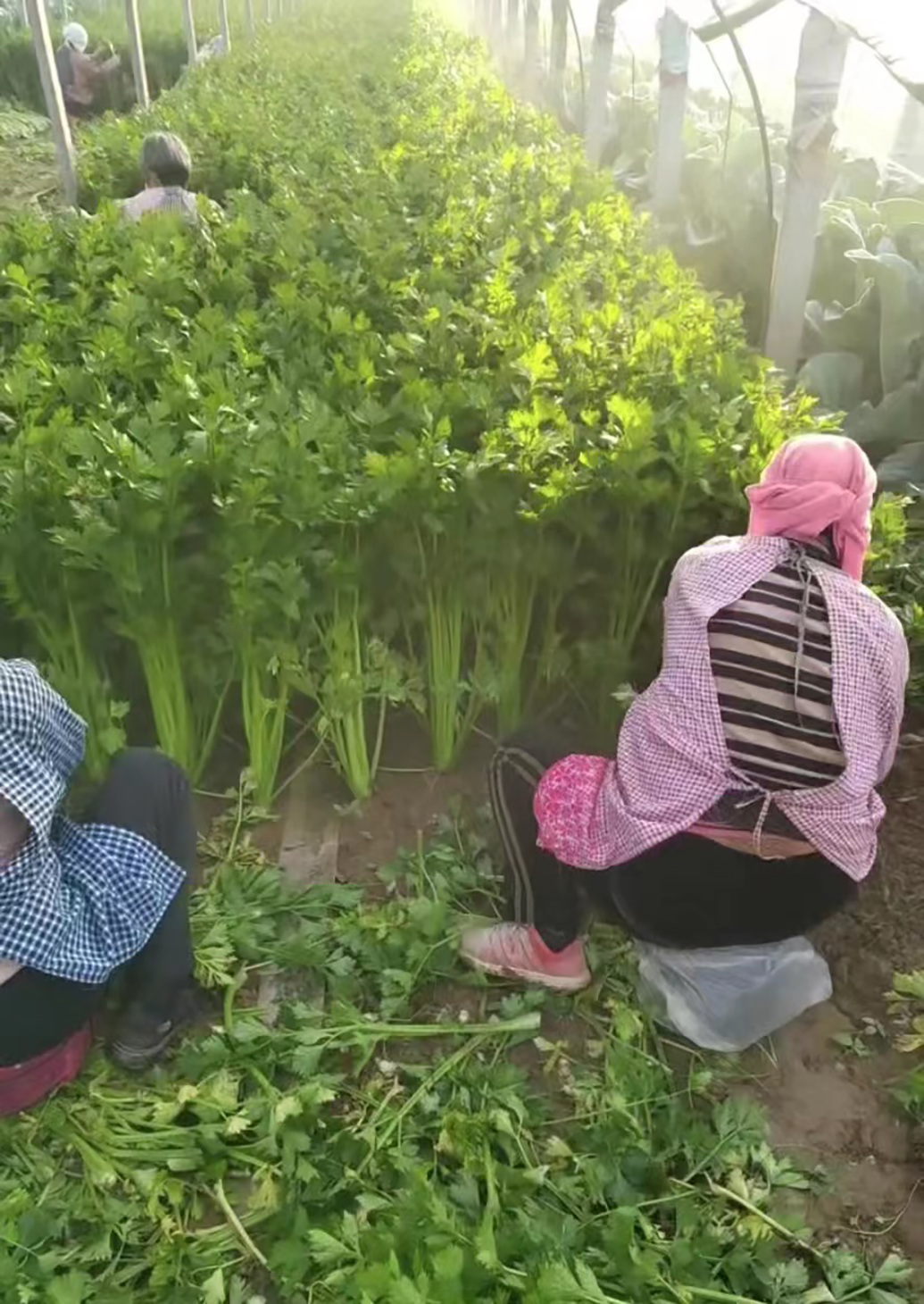
In Sun Ze’s vegetable field, workers are harvesting celery. The pictures in this article are all provided by the respondents.
"vegetables can’t be sold"
On November 18th, Sun Ze posted a short video on the social platform with the words, "The boss who wants to buy food can’t come, and the one who wants to sell food can’t sell it. Is a few cents enough for his wages? No way, I can only break the ground. "
Below this video, someone commented, "I’m from Jinan, and I really want to pull the goods, but I asked, I can’t get down to the expressway, and I have to be isolated when I come back."
Three years ago, 34-year-old Sun Ze and his friends invested more than 2 million yuan to plant celery, Chinese cabbage, cauliflower and pepper in Pujilian Town, Cao County. In previous years, these vegetables were sent to all parts of the country, and when the market was good, they could sell tens of thousands of kilograms a day.
Now, the vegetables he harvested can’t be transported outside, some of them are in the ground and some are in the cold storage, and they can only be sent to friends around at a loss of 23 cents per catty.
At present, there are still high-risk areas of the epidemic in the towns of Qilou and Ancailou within the scope of Cao County.
The staff of Cao County Epidemic Prevention and Control Headquarters said in an interview on the 24th that since September, local authorities have implemented peer-to-peer closed-loop management for truck drivers. No matter whether it is from high-risk or low-risk areas, truck drivers who go to Cao County must report to the local authorities three days in advance, and the doors need to be sealed until they leave after loading. If you come from a high-risk area, you need 7 days of home isolation or centralized isolation.
September is the season for vegetables. "There are customers who buy vegetables through me, but it is too much trouble to report to isolation. The car can’t be found, and the locals can’t consume much. " Sun Ze said.
"The wholesale price outside is not high either," said the staff of the Market Information Department of Caoxian Agriculture and Rural Bureau on the 25th, saying that the unsalable vegetables were not entirely due to the epidemic situation.
She said that this year is a warm winter, spinach, rape and cabbage are harvested in advance, and the national vegetable harvest is concentrated on the market. In addition, the prevention and control of the epidemic restricted the gathering and population circulation, and the demand decreased, resulting in a decline in vegetable prices.
Lin Ying, who lives in Zhoukou, Henan Province, is also worried about the sales of vegetables in greenhouses this month. In the last ten days, several vegetable dealers she contacted by phone all said that "(the driver) won’t let go of the highway intersection and can’t get in."
Lin Yingjia is a "big land-owner", with more than 200 mu of land, of which wheat accounts for 170 mu. The 40 acres of baby cabbage and more than 10 acres of spinach planted in September have matured.
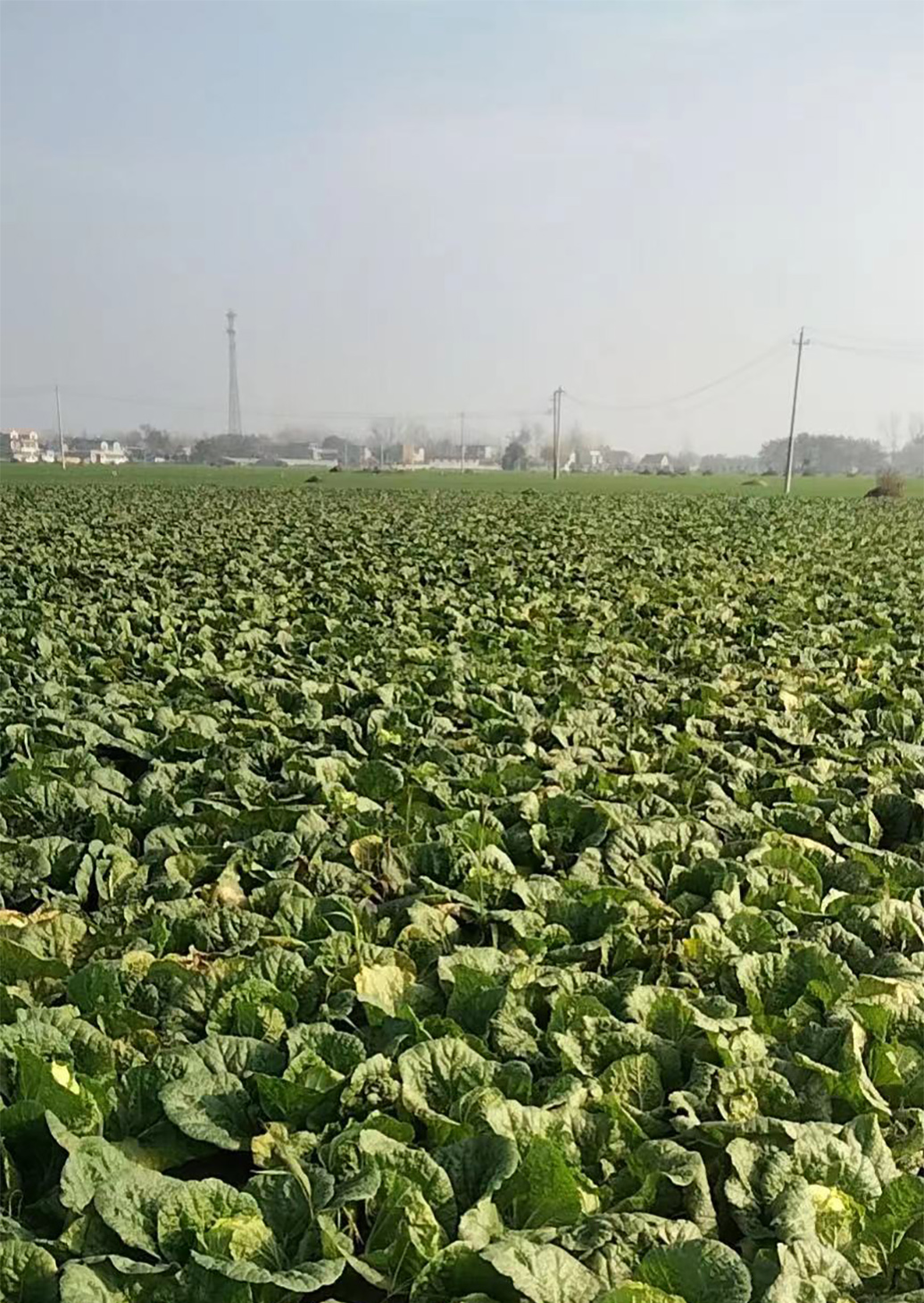
Lin Ying’s vegetable field.
At the busiest time, Lin Ying and her husband got up when they heard the cock crow, and went to work in the fields, so they couldn’t eat breakfast. The output of vegetables is good this time. In normal times, she would laugh happily, but this year she can’t laugh. The year before last, the baby dish cost 3 cents a catty, last year, it cost 5 cents a catty, and this year it dropped to 2 cents.
In the same harvest season, Sun Ze spent a whole day in the fields, picking vegetables with 30 workers, each of whom worked 10 hours a day, and an hourly fee was paid to 15 yuan.
Cao County, where Sun Ze is located, is a large agricultural county in Shandong, and in recent years, it has focused on developing characteristic vegetable production bases. In previous years, Sun Ze’s vegetables were mainly sent to Beijing Xinfadi Market, which is the largest agricultural product wholesale market in the local area, covering an area of 1,680 mu and handling 18,000 tons of vegetables a day.
This year, Wang Tao, who has been stationed in Xinfadi Market for ten years, rarely receives vegetables from Cao County. He is a native of Cao County, and his home land is rented to others to grow greenhouse vegetables, and his relatives and friends in his hometown also grow vegetables.
Before the epidemic, trucks carrying goods and delivering goods in Xinfadi were one after another, but now it is much colder. The market only does wholesale, not retail. Wang Tao mainly deals with old customers. "Last year, the amount of travel was 100,000 Jin a day, and this year it was only 10,000 Jin or 20,000 Jin."
Wang Tao collected cabbage, potatoes, beans, celery and cauliflower from farmers. Potatoes are the best, and they are not easy to spoil. A catty can sell for more than one piece, and other vegetables are mostly two or three cents a catty.
He calculated the account, and the vegetables were transported from Cao county to Beijing, including the purchase fee, freight, cooldown fee, unloading fee, etc., and the cost was 80 cents a catty. At the current price, it may cost tens of thousands a month.
"The car won’t run."
On November 22nd, the cauliflower sold by Wang Tao in the market was shipped from Jining, Shandong. He got up at 3 am to pick up the goods and made nucleic acids at 7 am. A car full of vegetables has been sold for two days, with about half left.
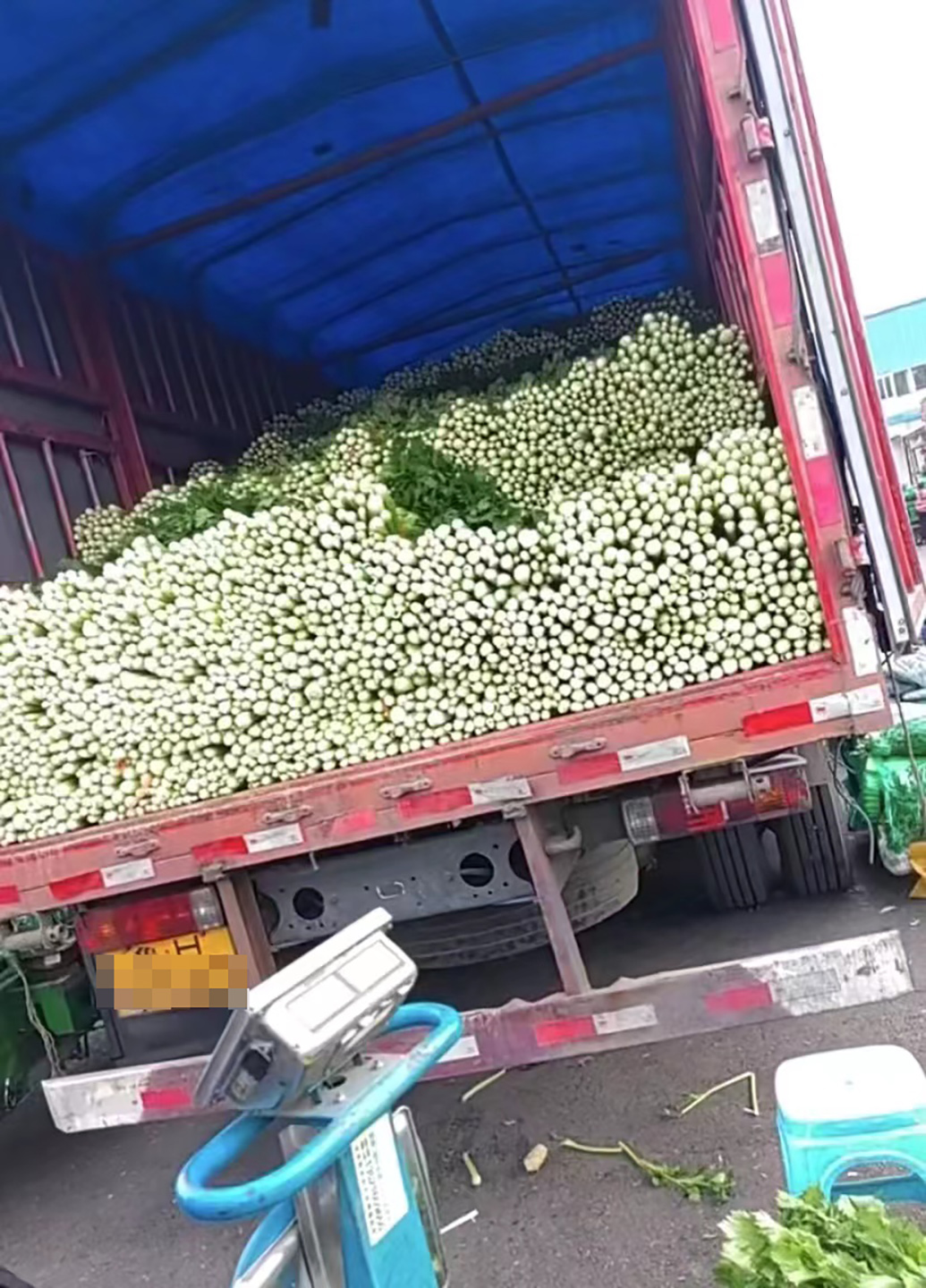
Wang Tao sells vegetables in Xinfadi.
Hou Zhi, the driver who delivered the goods to him, came to Xinfadi for the first time. Drivers entering the market need to show their nucleic acids and travel cards within 24 hours, and vehicles should be killed. Vehicles from high-risk areas will have pop-ups and Hou Zhi will be sealed in the cab.
"Drivers run all over the country, so it’s hard not to pop the window." Hou Zhi told reporters that in order not to let the food rot in the car, it is sometimes necessary to find a driver, and the cost of a driver is about 800 yuan to 1000 yuan.
A survey report recently released by Xinfadi Market shows that there is obstruction in market logistics. The released vehicles with pop-up windows need to be killed, and the killing ability is insufficient, and the waiting time for killing is long. After xiaosha, the driver is closed for management, and the vehicle needs to find a driver to enter the market, and then drive out of the market and return it to the driver after the transaction is completed.
There are fewer vehicles willing to carry, and the freight rate has also increased. "The usual freight rate is more than 2,000, and now it has risen to more than 4,000." Wang Tao said that if the vegetables were not sold out that day, he would have to pay the driver 300 yuan an extra day’s overtime fee.
On November 18, Xinfadi issued a notice saying that the "Turnover Zone 2" in the market had been unsealed, and vehicles suspended from other places could return to the Turnover Zone 2 for trading.
Wang Tao and his wife rented a 10-square-meter bungalow in Xihongmen, and the rent was 1,700 yuan per month. Xihongmen is about 10 minutes’ drive from Xinfadi Market. On November 23, the residence was closed, and Wang Tao moved to a hotel near the market one day in advance, "I will go back when I unblock it."
Wang Tao gave Hou Zhi food through the gap in the window. The other party had lived in the cab for two days and put two seals on the door. In the middle of the night, some drivers in the market couldn’t hold back and got off to get some air.
"get through the low temperature"
In the comment area below Sun Zefa’s video, there are farmers from Henan, Shandong, Hebei, Gansu and other places to post.
"(Vegetables) can’t be sold here." Lin Ying heard that someone in the village next door destroyed the food in the ground. "It’s all elders, so it’s estimated that there is no way out."
Lin Ying is 51 years old. There are three children at home who go to school. Her husband used to work in other places. Since five or six years ago, the husband and wife have been farming for a living. The Chinese New Year is coming soon. Children need tuition and living expenses, and they can’t keep deposits at home. If the vegetables in the field can’t be sold, it is estimated that there will be a loss of 70 thousand to 80 thousand if the cost is included.
These days, she often goes to the greenhouse alone and walks around the vegetable fields. The doll dishes that grow well make her worry, and she plans to switch to wheat next year.
"Maybe the price was high the year before last year, and the planting area of some vegetables is a bit large this year." The staff of Caoxian Agricultural Bureau said that the county is mainly guiding farmers to sell at the wrong peak. In a few days, it will rain and snow, and the price of leafy vegetables may rise.
"For example, celery can be stored and kept fresh for 50 days, and cabbage is also a bumper harvest this year. We first stored it, and then guided the wholesalers to buy it and put it in the fresh-keeping warehouse. At the same time, government agencies, including canteens, helped farmers consume part and buy part. " She said that everyone in her unit bought 50 kilograms of vegetables, and helped farmers connect with the surrounding supermarkets, and some foreign merchants came over.
On November 19th, Henan Province, where Lin Ying is located, issued 10 measures to help farmers sell vegetables, demanding that "layer upon layer overweight" is strictly prohibited. Transportation departments at all levels strictly implement the policy of "green passage" for the transportation of fresh agricultural products, waive vehicle tolls, and give priority to issuing vehicle passes for vegetable transportation. At the same time, "one vehicle, one license and one line" can be implemented in areas where passes are enabled, and vehicles can make multiple trips within the validity period.
On November 21st, the Agriculture and Rural Bureau of Caoxian County also announced that in order to facilitate the majority of vegetable farmers to grow, manage and sell vegetables better, if they have technical problems and sales difficulties, they can call the hotline. According to the Farmers Daily, Cao County is adjusting epidemic prevention measures to unblock traffic arteries and logistics microcirculation.
"Isn’t it cheap now? You can accept it late." The staff of the agricultural bureau interviewed suggested that "the open-field vegetables should be collected before the cold air comes, and the vegetables that can survive the winter should not be collected as much as possible now."
At present, Sun Ze still has about 150 acres of vegetables in the field, and he intends to harvest them overnight. Lin Ying is covering vegetables with non-woven fabrics, hoping that they can survive the low temperature.
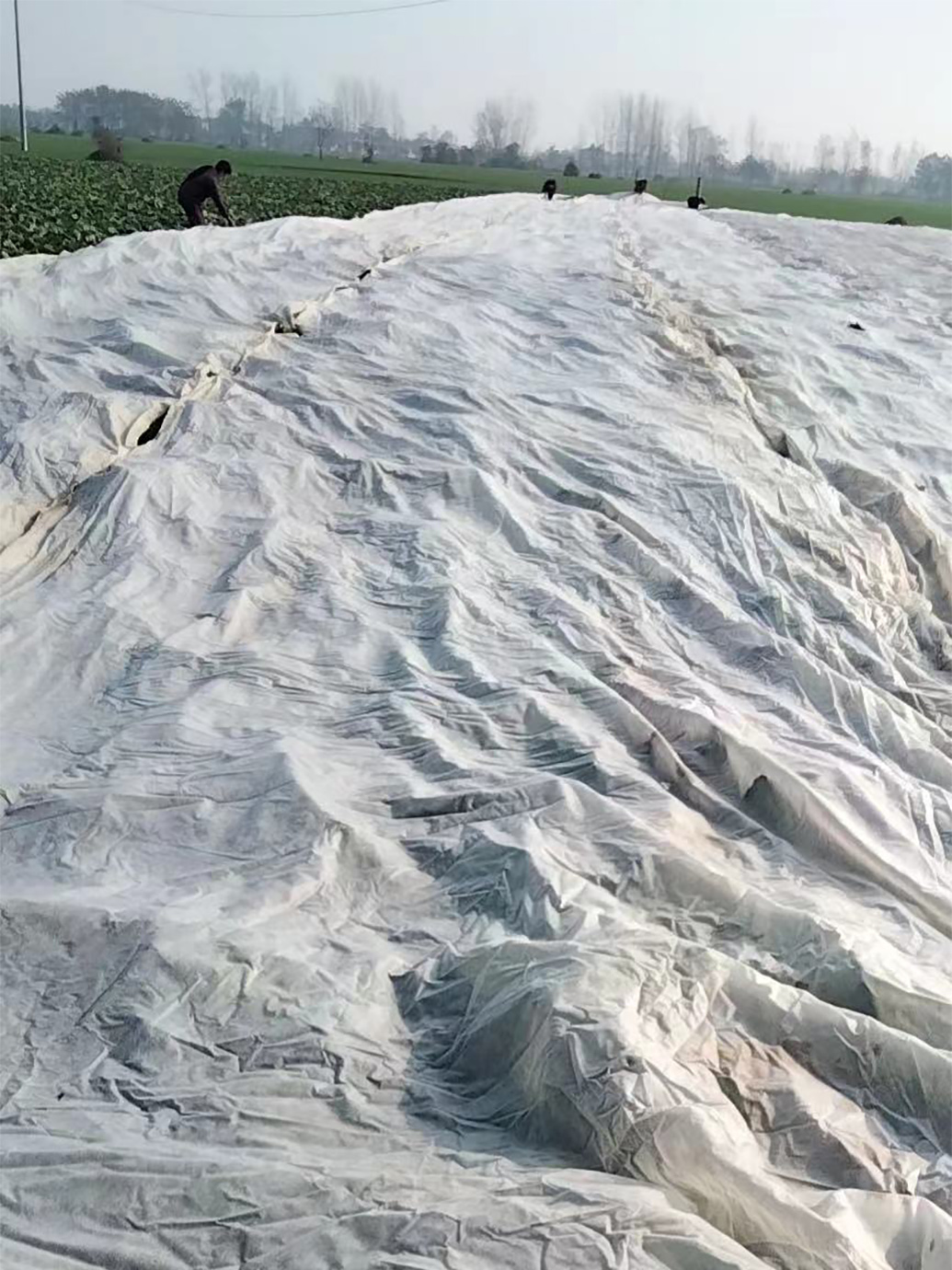
Lin Ying is covering the vegetables with non-woven fabrics.
(In order to protect the privacy of the respondents, the characters in the text are all pseudonyms.)