Don’t let the old people worry because they can’t play with "intelligence"
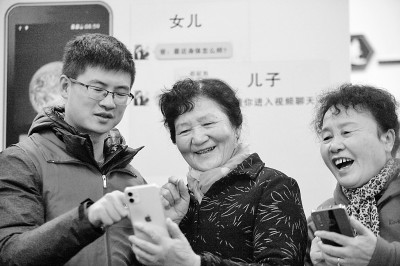
On November 26th, in Chunjiang Community, Wenhui Street, Yangzhou City, Jiangsu Province, volunteers were teaching the elderly to use smart phones. Xinhua News Agency issued Meng Delong photo
Recently, a video of a 94-year-old man in Guangshui, Hubei Province who was carried to the bank for face recognition to activate his social security card caused a heated discussion, while some elderly people were inconvenient to travel because they didn’t have a "health code", or encountered many "obstacles" in the process of online registration, online medical treatment and online shopping.
"The number of elderly people in China is growing rapidly. Many elderly people can’t surf the Internet and use smart phones. They encounter inconvenience in daily travel, medical treatment and consumption, and they can’t fully enjoy the convenience brought by intelligent services. The problem of’ digital divide’ faced by the elderly is increasingly prominent." On November 26th, Lu Xiangdong, director of the E-government Office of the General Office of the State Council, said at the briefing held by the the State Council Information Office that the difficulty in using smart technology seems to be an ordinary trivial matter in daily life, but it actually concerns the vital interests of the elderly.
In this regard, the "Implementation Plan on Effectively Solving the Difficulties of the Elderly in Using Intelligent Technology" (hereinafter referred to as the "Plan") issued by the General Office of the State Council recently refines various service measures in view of the "pain points" encountered by the elderly in using intelligent technology in travel, medical treatment, consumption and other scenarios.
1. The "health code" is no longer the only pass certificate.
During the epidemic, people used to scan the code, but for the elderly who can’t use smart phones, it has become a big problem to show the "health code".
In this regard, the "Program" makes it clear that in the low-risk areas of COVID-19, except for special places such as airports, railway stations, long-distance passenger stations, docks and entry and exit ports, it is generally unnecessary to check the "health code". All localities are not allowed to use the "health code" as the only voucher for people to pass. For the elderly and other groups, alternative measures can be taken, such as registering with valid identity documents, passing through with paper certificates, and showing a "communication itinerary card" as an auxiliary itinerary certificate.
Wang Haidong, director of the Department of Aging Health of the National Health and Wellness Commission, said that in the future, it is necessary to coordinate relevant departments to automatically integrate relevant information into the "health code" through technical means, so that computers can save more work and the elderly can save more work. At the same time, we will promote the nationwide "health code" to be accessible and mutually recognized, and retain other ways to replace the inspection, such as the elderly who do not use smart phones with valid identity documents.
"We should optimize the inspection measures of’ health code’ to ensure that the elderly can travel without’ health code’." Cai Tuanjie, spokesperson of the Ministry of Transport and head of the Department of Transport Services, said that if it is really necessary to check the "health code", the manual service should be retained, and the local authorities should be guided to optimize the services of relatives and friends and staff to check on their behalf. At the same time, we will promote the establishment of "health code-free" channels for the elderly who do not use smart phones in passenger stations with external methods.
2. "One-click car calling" is convenient for the elderly to travel daily.
In order to solve the problems such as "car-sharing software is too complicated to operate", Shanghai taxi waiting site has launched the "one-click car calling" function. The old man only needs to press the button, and the demand will be sent to the taxi driver nearby. Xu Yiqun, deputy general manager of Shanghai’s unified taxi platform "Shencheng Travel", said that at the peak, the number of orders for the elderly to call a car reached three or four thousand a day.
In order to facilitate the daily transportation of the elderly, the "Proposal" proposes to guide the network car platform company to optimize the car software, add a "one-click car call" function, encourage the provision of telephone call services, and give priority to the elderly orders. Railway, highway, water transport, civil aviation passenger transport and other public transportation, while implementing mobile payment, e-ticket and code scanning, retain the way of using cash, paper bills, vouchers and certificates.
Cai Tuanjie said that it is necessary to maintain the call and call service for cruise taxis and ensure that the elderly can take taxis without surfing the Internet or having a mobile phone. Encourage qualified areas to promote the elderly to take urban public transport directly with ID cards, old-age cards and other documents. For places such as passenger stations and expressway service areas such as roads and rail transit, it is required to keep artificial service windows, encourage the establishment of priority ticket purchase, special waiting areas or green passages for the elderly, and keep cash and paper bills while promoting services such as mobile payment and code scanning.
3. A variety of appointment registration methods to facilitate daily medical treatment
Online appointment registration, self-service payment and self-service printing of inspection reports have brought convenience to people, but also become a problem for many elderly people to seek medical treatment.
In this regard, the First Hospital of Changsha City, Hunan Province launched a series of measures to facilitate the elderly to seek medical treatment. For example, guiding nurses and volunteers will assist the elderly to register and pay fees on the self-service machine with their ID cards. "I will teach you by hand, and I will learn it after several operations." Fan Zhongdong, a 66-year-old Changsha citizen, said. In addition, the hospital routinely keeps the manual registration window, and specially sets the No.3 window as the priority window to serve the elderly over 65. The outpatient service desk also provides various convenience facilities for the elderly in need, such as reading glasses, magnifying glasses and wheelchairs.
The "Proposal" proposes that medical institutions and related enterprises should improve various appointment registration methods such as telephone, internet and on-site, and unblock the channels for family members, relatives and friends, family contracted doctors and other elderly people to make appointment registration. Simplify the process of online medical service, provide voice guidance, manual consultation and other services for the elderly, and gradually realize the information communication between online medical service and intelligent terminal equipment such as self-service registration, number calling, payment, printing inspection report and medicine taking of medical institutions, and promote the combination of online and offline services.
Wang Haidong said that in the future, it is necessary to carry out activities to build elderly-friendly medical institutions throughout the country, and to carry out actions to help the elderly with wisdom, so that the elderly can use and make good use of smart technology.
4. High-frequency consumer places support cash payment
Mobile payment will not be used, some merchants are unwilling to accept cash, and the operation of intelligent terminals at bank outlets is complicated, which makes many elderly people feel "troublesome".
In order to facilitate the daily consumption of the elderly, the "Program" proposes to retain the traditional financial services. Retail, restaurants, shopping malls, parks and other high-frequency consumer places for the elderly, water and electricity fees and other basic public service fees, administrative fees, should support cash and bank card payment. Strengthen the supervision of the payment market, and intensify the rectification and rectification of discriminatory behaviors such as refusing to accept cash and refusing to pay by bank cards.
Li Wei, director of the Science and Technology Department of the People’s Bank of China, said that in view of discrimination and exclusion of cash use, centralized rectification of cash refusal and construction of a long-term mechanism will be comprehensively carried out. In view of the problem that some elderly people can’t use mobile payment and their daily consumption is inconvenient, we will guide market institutions to improve the convenience and convenience of payment products from the aspects of interface and operation, and strengthen the knowledge propaganda, education and popularization of mobile payment for the elderly. In addition, it will guide financial institutions to create "age-appropriate" financial services that integrate online and offline and meet the needs of the elderly. For example, create some smart financial apps such as large-character version, voice version, national language version and concise version.
5. Smartphones and Internet applications will be transformed accordingly.
Smartphones and other products bring a lot of convenience to life, but many elderly people can’t use them or use them badly.
The "Proposal" proposes to promote the aging transformation of smart terminal products such as mobile phones, making them more convenient for the elderly, such as large screen, large font, large volume, large battery capacity and simple operation, promoting the aging transformation of Internet applications, and carrying out intelligent technology education for the elderly.
Sui Jing, head of the Information and Communication Administration of the Ministry of Industry and Information Technology, said that in the future, we will focus on promoting the aging transformation of websites and mobile apps closely related to the basic lives of the elderly and the disabled, and also encourage enterprises to provide "old-age mode" and "elder mode" on smart devices, so that the elderly can obtain information and services more conveniently and quickly, and continue to expand the supply of smart terminal products for the elderly. At present, the Ministry of Industry and Information Technology has been screening a number of nearly 100 Internet websites and mobile apps closely related to the lives of the elderly, such as news media, life entertainment and online shopping, and mobilizing them to improve the use experience of the elderly in terms of font size, font color and voice reading.
6. Facing the aging population, we should "walk on two legs"
Population aging is the basic national condition of our country for a long time to come. By the end of 2019, the number of elderly people aged 60 and over in China reached 254 million, accounting for 18.1% of the total population. It is a long-term task to coordinate the development of intelligent technology with the development of aging.
Zhao Chenxin, secretary-general of the National Development and Reform Commission, believes that at present, digitalization, informationization and intelligence are the development directions, but at the same time, it is really necessary to pay attention to and take care of the needs of various social groups and help the elderly to cross the "digital divide". To solve this problem, we must "walk on two legs."
"We should not only welcome the effective promotion and application of intelligent technology, but also use intelligent technology to facilitate life and production. At the same time, we must reasonably retain the traditional service methods familiar to the elderly and related groups to meet the daily life of people of different ages, different educational backgrounds and different living habits, especially the elderly." Zhao Chenxi said.(Reporter Liu Kun)