You should know these things about bird flu.
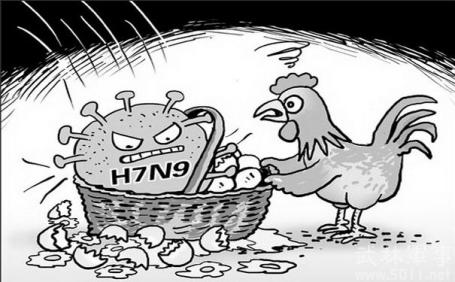
According to the website of Beijing Municipal Health Planning Commission, on February 11, 2017, a case of imported human infected with H7N9 avian influenza was reported in Beijing. The patient is Zhang, male, 68 years old, from Langfang City, Hebei Province; On January 29, he became ill locally and went to a local medical institution for treatment. Due to the gradual aggravation of his illness, he was transferred to our city for treatment by 120 ambulances on February 6. On February 11th, a case of human infection with H7N9 avian influenza was diagnosed. At present, the patient is in critical condition and is still in full treatment. After investigation, the patient has a history of suspicious contact with poultry, and his close contacts have no related symptoms at present. This patient is the first case of human infection with H7N9 avian influenza discovered in our city in 2017.
(Image from the Internet)
In recent years, the alarm of avian influenza virus mutation and interpersonal avian influenza caused by it has been sounded all over the world. In 2013-2014, as a new subtype of influenza virus discovered for the first time in the world, H7N9 avian influenza virus caused human infection and death in China. What makes bird flu "step by step"? What makes avian influenza virus break through the barrier of species?

(Image from the Internet)
What is bird flu?
Avian influenza, the full name of avian influenza, is an animal infectious disease caused by virus, which usually only infects birds, rarely infects pigs, and rarely infects people across species barriers. According to the types of pathogens, avian influenza can be divided into three categories: high pathogenicity, low pathogenicity and non-pathogenicity. Why avian influenza is rampant across species? Let’s track the transmission path of avian influenza virus together.
Genomic analysis of avian influenza virus
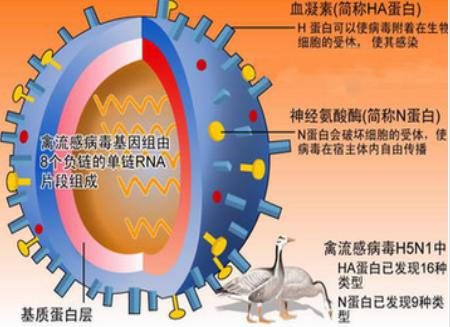
The genome of avian influenza virus consists of eight single-stranded RNA fragments with negative strands. In the concept of avian influenza virus, both H and N refer to the glycoprotein of the virus. One glycoprotein is called hemagglutinin (HA) and the other is neuraminidase (NA). Because these two glycoproteins are easy to mutate, HA can be divided into fifteen different types from H1 to H15, and NA can be divided into nine different types from N1 to N9. Among them, H5 and H7 are highly pathogenic. The researchers found that besides the genes encoding hemagglutinin and neuraminidase, the genes encoding NS1 protein also varied frequently. Among different influenza viruses, the gene sequences encoding these three protein have the greatest variation, which indicates that they determine the pathogenicity of the virus.

Transmission route of avian influenza
1. Through respiratory droplets and air transmission. When sick birds cough and sing, they spray droplets with viruses floating in the air, and people are infected by inhaling respiratory tract.
2. Infection through digestive tract. Eating meat and its products, eggs, water and food contaminated by sick birds, eating utensils and drinking utensils contaminated by sick birds, or eating with contaminated hands, and getting infected and getting sick;
3. The damaged skin and conjunctiva are easy to get infected with virus.
Common types of avian influenza
(1)H7N9 avian influenza
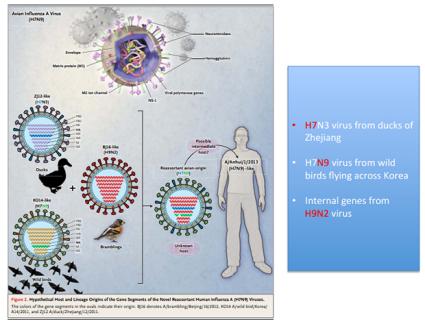
Variation process of H7N9 avian influenza virus
Since 2013, H7N9 avian influenza virus has caused human infection in many provinces and cities in China, which has aroused widespread concern in the whole society. Human infection with H7N9 avian influenza is mainly caused by contact with poultry carrying H7N9 avian influenza virus. At present, there is no evidence of human-to-human transmission.
The cooperation between Institute of Microbiology of China Academy of Sciences, Institute of Zoology and China Center for Disease Control and Prevention proved that H7N9 avian influenza virus was a new type of reassortment virus in 2013. This achievement enabled people to effectively judge the source of the virus, predict the potential risk of avian influenza virus outbreak in advance, give early warning in time and improve the ability to control the spread of the virus.
(2)H5N1 avian influenza
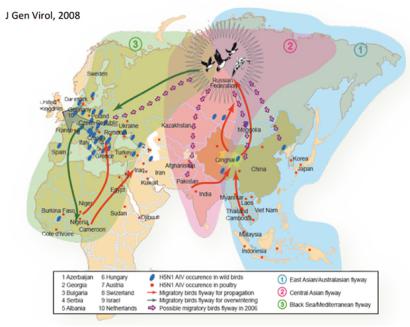
Transmission Path of H5N1 Avian Influenza Virus
At present, H5N1 is a highly pathogenic and lethal strain. Generally, people will die within ten days after infection, and the mortality rate is as high as 60%.
When a virus invades a person’s body, generally speaking, the human immune system can recognize these "uninvited guests" and release antibodies to fight them. However, some cunning viruses can escape the recognition of human immune system, and H5N1 avian influenza virus is such a virus. The reason why this virus can make waves in the human body is that it can constantly mutate, thus escaping the blocking of antibodies and even drugs and invading normal cells. Therefore, in order to design an effective vaccine against avian influenza, it is necessary to conduct in-depth research on the therapeutic mechanism of avian influenza and find out the stable and unchangeable drug targets.
The Institute of Microbiology analyzed the important phenomenon that the mutation of important amino acids led to the airborne transmission ability of H5N1 virus among mammals, and revealed the transmission mechanism of H5N1 avian influenza virus among different bird species at the molecular level, which made an important breakthrough in this field.
How to prevent it from entering the spring when infectious diseases are high?
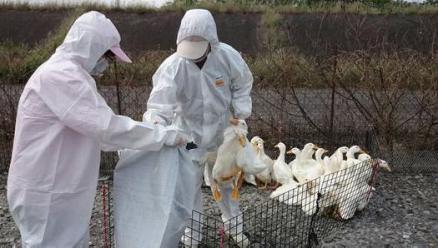
Try not to touch live birds, keep the environment clean, eat fresh poultry food after it is cooked, and relevant employees should do occupational health protection; Spring is the season with frequent infectious diseases, so it is necessary to develop good personal hygiene habits, wash your hands frequently and do necessary personal health protection.